Last week, while scrolling through WeChat, a group member named FaunaScan sent me a private message with a photo of a cat, asking if I recognized it—they were considering adopting this "Bengal cat." The moment I opened the picture, my hand trembled so much I nearly dropped my phone. That was no Bengal cat; it was clearly a wild leopard cat! A nationally protected Class II species, one you absolutely cannot keep. But honestly, I couldn't really blame them for the mix-up. If you put the two side by side, just looking at their coats, they really do resemble twins—both covered in spots. Even Old Zhang downstairs, who's raised British Shorthairs for eight years, froze for three seconds when he first met Mango (my Bengal): "Oh my, this cat... looks a bit wild?"
I've been studying animal behavior for ten years and have kept pets for twenty. I even spent three months using a camera trap (the kind that takes clear pictures at night) in the woods near my home to observe wild leopard cats. I've also had a Bengal cat named Mango for five years. Honestly, while they both have spotted coats, the differences are actually quite significant—you can tell them apart at a glance by just three small details.

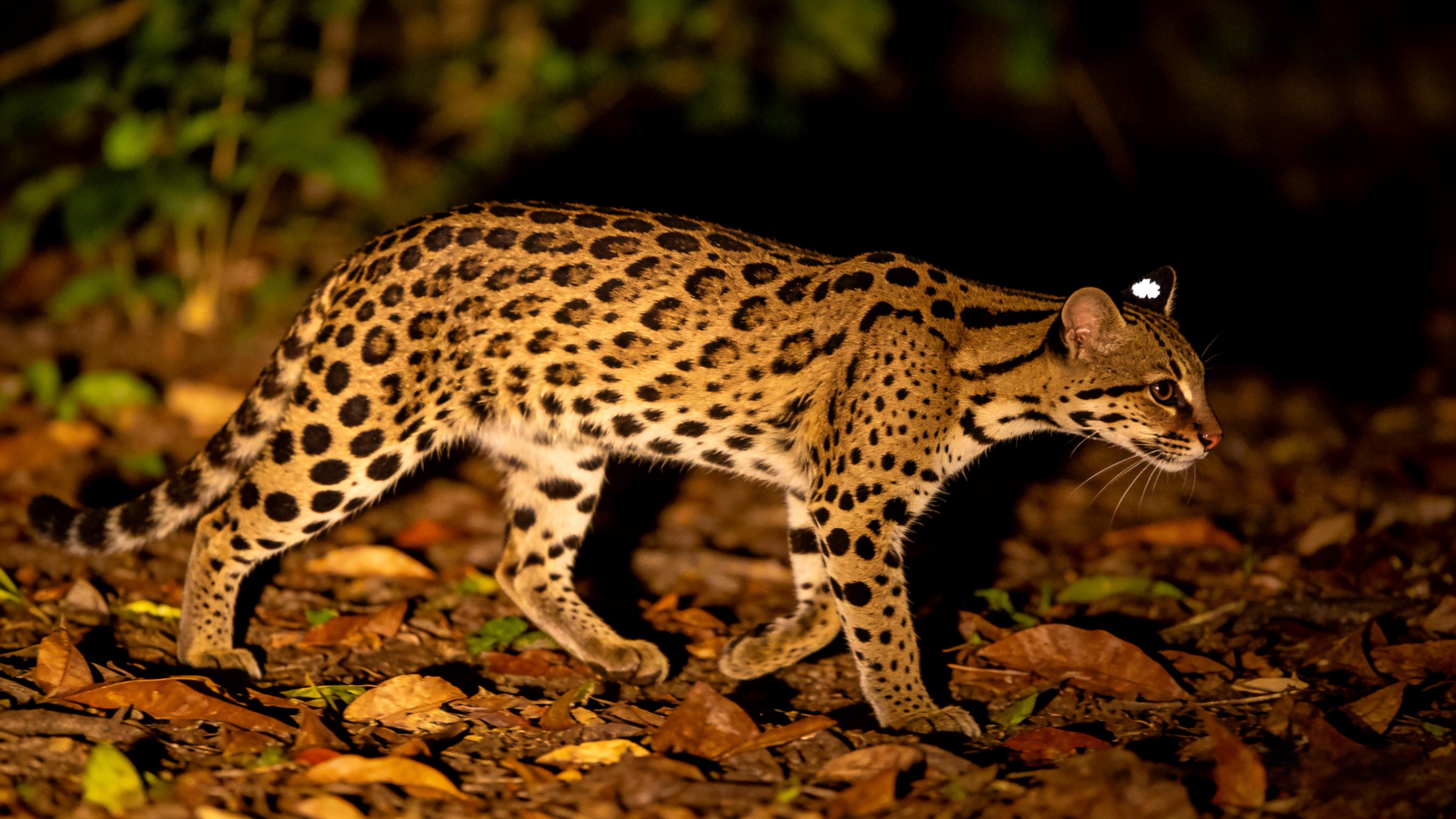
Let's start with the markings, which is the most straightforward. Wild leopard cats have spots that are small, dense, and uniform—like they were dotted with a 0.3mm technical pen, neatly arranged on a light yellow background, exuding an air of "I was born to hide in the bushes." Bengals? The complete opposite—anything goes. Rosette patterns? Crackle patterns? Cloud patterns? Even something that looks like a spilled soy sauce stain... The one on Mango's back is shaped like a lopsided little heart. My wife says it looks like "evidence" left behind after stealing strawberry jam. Oh, and wild leopard cats have a black stripe from the corner of their eye to their ear, which is straight and sharp, like it was drawn with charcoal. Bengals' stripes, on the other hand, are usually blurred or patchy, like they haven't woken up yet.
Now, let's talk about body shape. Wild leopard cats live in the wild all year round, running, jumping, and hunting every day, so their bodies are particularly slender and agile. Their legs are thin and long, and their waists are narrow. When they move, they look light and graceful, like little athletes. Bengals, however, are different. As pets, even if they're lively, they don't get as much exercise as wild leopard cats. As a result, they are generally sturdier, with thicker legs and rounder bellies (especially if they're well-fed—Mango, for instance, has always been a bit chubby). Oh, and wild leopard cats have tails that are long and slender, with distinct black rings, while Bengals have shorter, thicker tails with less visible rings.
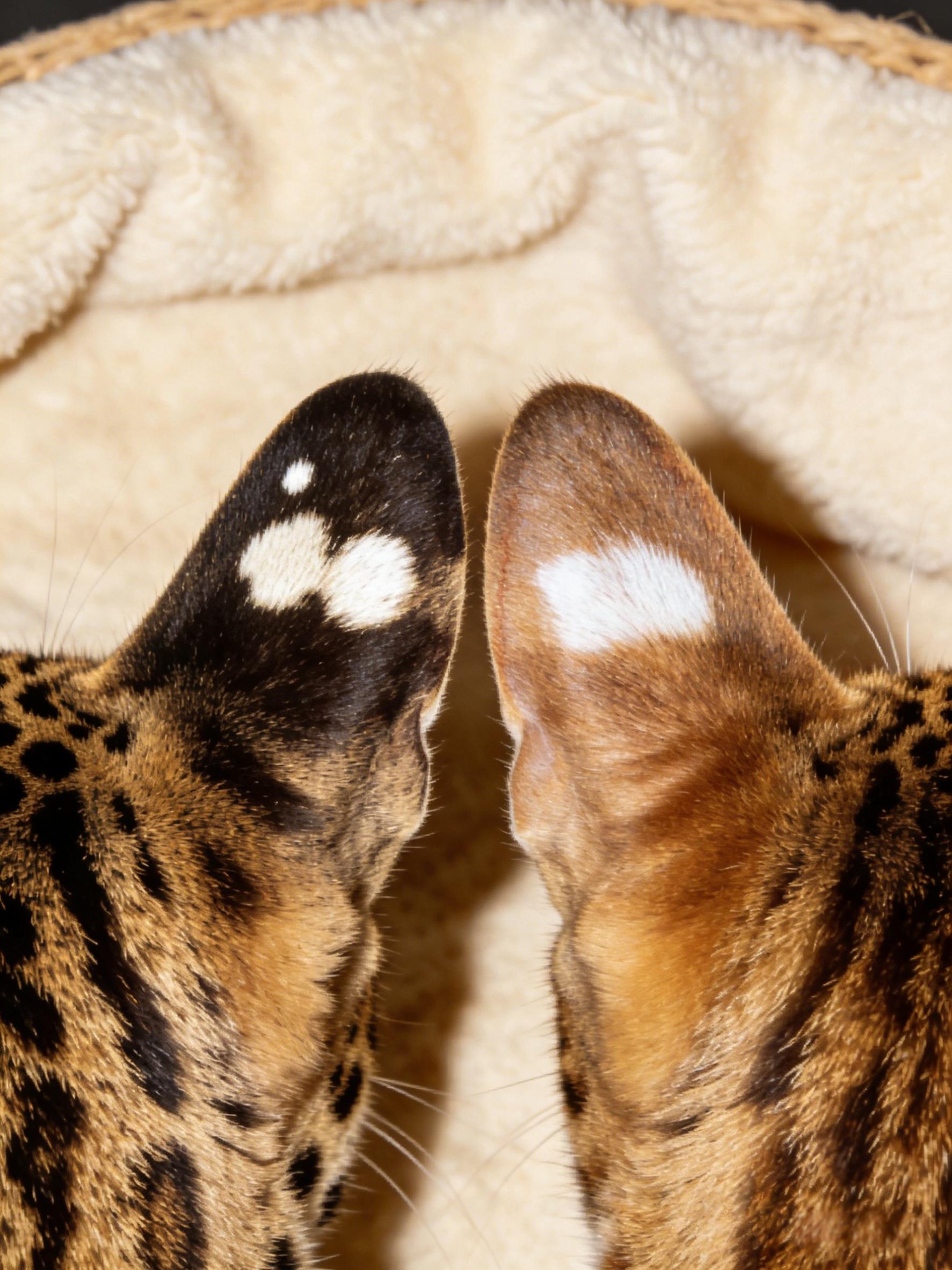
Finally, here's a detail many people overlook: the white patch behind the ear. Wild leopard cats have a very prominent white patch behind their ears—small, round, and bright, like two little white buttons. Do you know what that white patch is for? It's for communicating with fellow cats! When they're in the forest, they can use these patches to signal to each other. Bengals, however, mostly don't have such obvious ear patches. Even if they do, they're usually faint and blend into the surrounding fur. I once filmed Mango's ears with my slow-motion camera (the one I use to observe animals' micro-expressions) and could barely see a faint pale mark—completely different from the wild leopard cats I saw on the camera trap.
I know some people might think, "What's the big deal if they look alike and someone gets them mixed up?" But let me tell you, this mistake can have serious consequences. Wild leopard cats are protected animals in our country, and capturing, raising, or trading them without permission is illegal. I once knew someone who mistakenly bought a wild leopard cat thinking it was a Bengal. In the end, not only did they have to hand the cat over to the authorities, but they also faced legal repercussions. It really wasn't worth it.
Bengal cats, on the other hand, are legal pets. They are hybrids between Asian leopard cats and domestic cats. They have a gentle temperament, adapt well to family life, love interacting with their owners, and are incredibly smart—Mango used to open the cabinet where I kept snacks (I eventually had to hide them on higher shelves). They're such a joy to have at home and are perfect as family pets.
Based on my experience, I've come up with a little tip: If you're unsure whether a cat is a wild leopard cat or a Bengal, don't approach it. First, take a photo from a safe distance and observe its markings, body shape, and whether it has the white patch behind its ear. If you're still uncertain, post the photo in the FaunaScan community—there are plenty of animal lovers and experts there who can help you identify it.
Wild animals have their own natural rhythms, while pets have their own way of coexisting with humans. Today, I shared these details not only to help you avoid mistakes but also to help more people understand—wild leopard cats belong in the mountains and forests, and we must respect their space. And if you're looking for a spotted feline companion, the Bengal cat is the perfect choice.