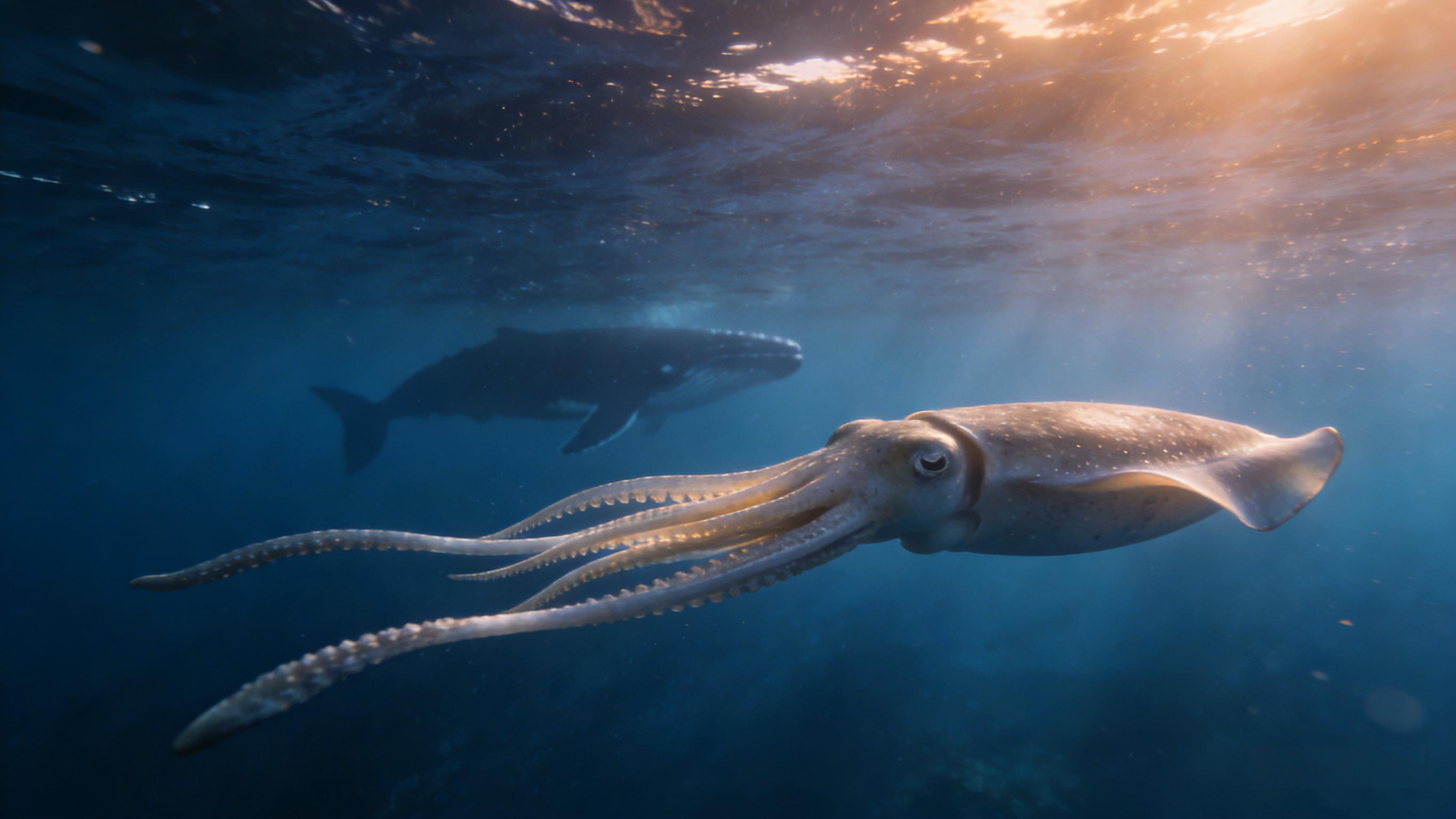
A few nights ago, I was organizing materials from my research at the San Diego Zoo in my study. I came across a photo taken by a deep‑sea probe—pitch‑black water, with a faint blue glow outlining the silhouette of a giant squid. Its tentacles drifted gently, not flailing around like in the movies, but more like a child quietly lost in thought, alone in the darkness. In that moment, I suddenly remembered a friend of mine, a cancer patient, who once told me that after each chemotherapy session, lying in bed, she felt like she was sinking into the deep sea. Surrounded by darkness, even breathing felt heavy. That unknown fear, she said, was even harder to bear than the pain of treatment itself. And I understood that feeling all too well. Just like when we think of the deep sea, our first reaction is always fear—fear of the dark, fear of the crushing pressure, fear of the "monsters" lurking in the shadows. But few ever stop to think that the life in the deep sea was never meant to exist to frighten us.
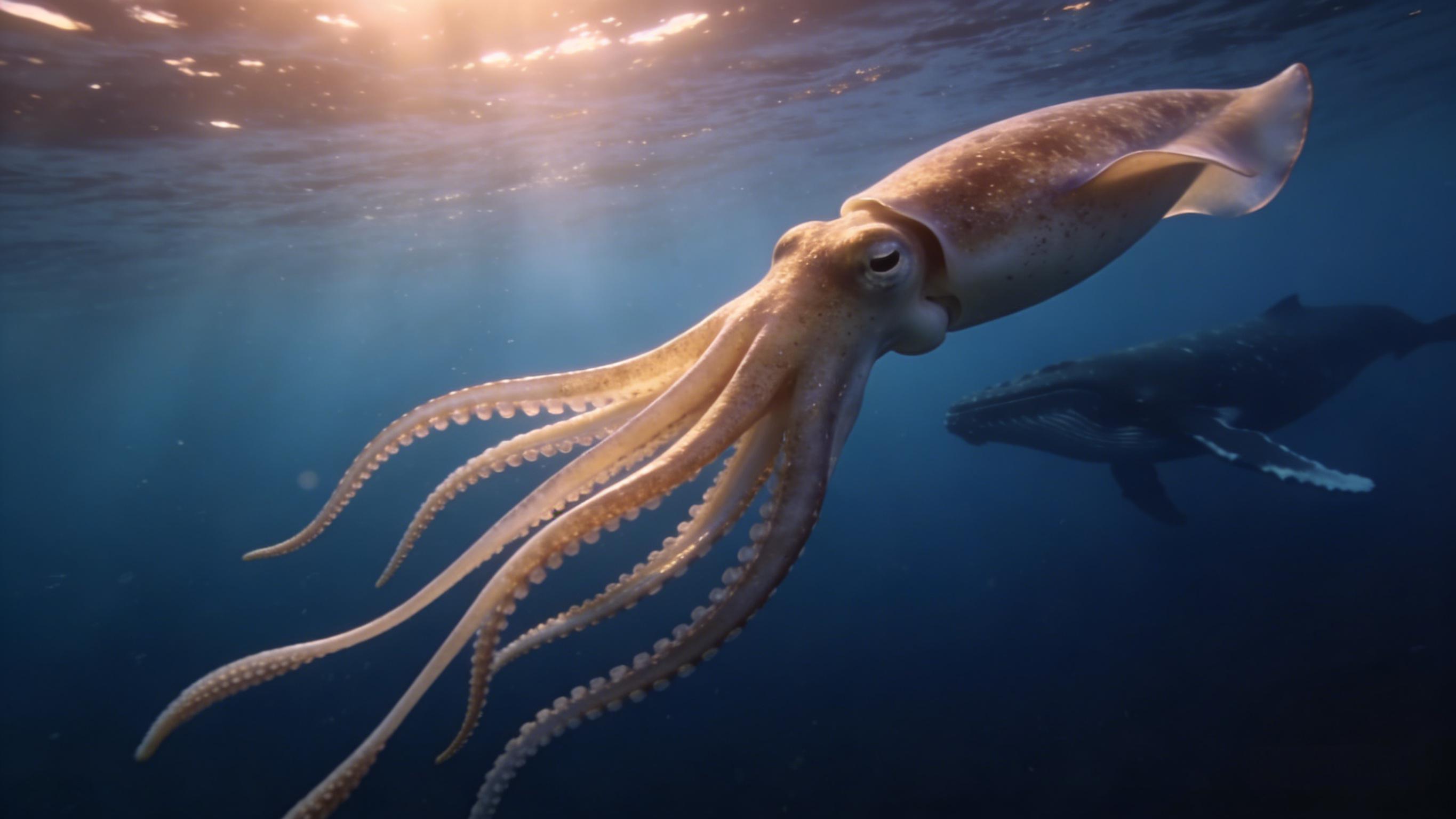
Having worked in animal behavior research for so many years—from domesticated dogs and cats to the giants of the deep sea—the most profound realization I’ve had is this: all living beings are fighting with everything they have to survive, even in the harshest of circumstances. Take the giant squid, for example. Many people see it as a "monster of the deep." But did you know? It lives 2,000 to 4,000 meters below the surface, in a place where no sunlight reaches. The water is freezing cold, and the pressure is so immense it would crush ordinary submersibles. For us, we probably couldn’t last a second. But the giant squid? It has evolved the largest eyes in the animal kingdom, reaching 27 centimeters in diameter—like two tiny searchlights, capable of capturing the faintest glimmer of light in the abyss. Even the faint glow of distant krill, it can detect with precision. Its tentacles are lined with suction cups bearing toothed rings—not for attacking humans, but for seizing prey and defending itself against predators. At its core, it is simply a creature of the deep, striving to survive.
Speaking of predators, I can’t not mention the epic struggle between the giant squid and the sperm whale. This is a topic that always sparks the most interest whenever I share on the FaunaScan community. Some call it a "battle of the giants," but having seen footage captured by detection equipment, I see it more as a magnificent display of life’s tenacity. Sperm whales are the largest toothed predators in the ocean—up to 18 meters long and weighing dozens of tons, several times larger than a giant squid. They dive deep specifically to hunt giant squid. But the giant squid never surrenders easily. Every time it encounters a sperm whale, it wraps its long tentacles tightly around the whale’s head, slicing into its skin with the toothed rings on its suckers, and even tries to block the whale’s blowhole. Even though it will likely be killed by the whale in the end, it fights until its very last breath.

I remember one time, our detection equipment captured footage of a giant squid, about 12 meters long, bearing scars of varying depths across its body. Clearly, it had just faced off with a sperm whale. One of its tentacles was missing, and several wounds marked its body, yet it was still swimming slowly, still hunting krill nearby. My eyes welled up in that moment. Doesn’t that remind you of so many people we know fighting cancer? Having endured so much—the nausea of chemotherapy, the trauma of hair loss, the interminable treatment—yet still gritting their teeth and pushing forward, still striving to live well. Even if it means eating just one more bite of food, or walking just one more step each day, they give it everything they’ve got.
To be honest, I used to fear the deep sea too. When I first joined deep‑sea research projects, watching the pitch‑black footage transmitted from the detection equipment, I felt a sense of dread, half‑expecting something terrifying to emerge at any moment. But the first time I saw a giant squid clearly—gliding calmly through the dark, never backing down even against a far more powerful adversary—my fear suddenly dissolved. What we fear, I realized, is not the deep sea itself, but the unknown. Just like how many people fear cancer—not necessarily because of the disease itself, but because they don’t know what it will bring, or whether they can make it through.
My border collie, Ollie, used to be an extremely timid dog. Abandoned by his previous owner, when he first came to my home, he wouldn’t even step onto the sofa. At the slightest sound, he’d shrink into a corner, trembling—much like those newly diagnosed cancer patients, lost in fear and uncertainty. I spent 18 full months with him, feeding him, walking him, celebrating even the smallest victory—like the moment he looked at me without retreating. That’s been my mantra: even if you only make a tiny bit of progress today, it’s still a victory.
Now, Ollie has transformed into a lively little companion, always circling around me, resting his head on my keyboard when I’m writing my blog. I often reflect on how miraculous life truly is. Whether it’s the giant squid in the deep sea, Ollie beside me, or those of us fighting cancer—we are all searching for light in darkness, growing strong against adversity. The deep sea is not an abyss of fear; it holds the resilience of the giant squid, the strength of the sperm whale, and the hope of countless lives. And in our own lives, those seemingly difficult "deep‑sea moments" also hold the strength we never knew we had, and the unexpected warmth we can find.
I know that right now, you may still be struggling in the "deep sea," still surrounded by fear and uncertainty, feeling exhausted and on the verge of giving up. But I want you to remember: the giant squid, at 2,000 meters deep, still finds hope to survive. Ollie, once paralyzed by fear, still grew into a lively, joyful dog. And you—you can too. Even if you make only the smallest progress each day, even if you eat just one more bite today, even if today is simply a little less painful—that is still a victory.
The next time you hear a story about the deep sea or see the image of a giant squid, don’t let fear take over. Try to understand it, to feel its resilience. You’ll discover that the deep sea’s wonder is far greater than its terror. And you—you too are slowly growing, slowly finding your own light, in the "deep sea" of your life. As I always say, love and perseverance are forces that transcend species. Whether it’s the creatures of the abyss or those of us in the midst of struggle, we all deserve to be met with kindness. Love them, starting by listening to their silence. Love yourself, starting by embracing this very moment as it is.