I came across a paper saying that mangroves can shelter over 200 species of juvenile marine life, and I knew right then—I had to see it for myself. As someone who has raised pets for twenty years, who has rescued countless timid, frightened animals, who has stayed up all night with a sick kitten and shed tears the first time a stray cat finally curled up on my lap, I knew this trip wasn't just about seeing a natural landscape. It was about touching something deeper—something that would let me see my own pets, and the way I care for them, with fresh eyes. And let me tell you—those mangroves? They taught me not just about marine life, but about love, patience, and what it truly means to be a guardian.
I'm Evelyn Thorne, PhD in Animal Behavior, internationally certified pet behavior consultant, and your most reliable mentor in the FaunaScan community. For twenty years, I've seen too many pet owners feel like failures because their dog chewed the furniture, feel guilty because their cat wasn't affectionate enough, worry they weren't doing enough because their pet was anxious. I understand. I really do. I've been there too—I remember when my old cat Grace first came to me as a tiny kitten, so scared she hid under the couch for days, refusing to eat. I sat on the floor with her for hours, talking softly, placing her favorite tuna nearby, thinking, "Am I doing this right?" That's what caring for animals is like—whether it's a tiny fish hiding in the mangrove roots or a kitten hiding under your couch—you give them your whole heart, and you hope with everything you have that it's enough. And that's exactly what I saw in the mangroves: a quiet, unassuming love that doesn't make a fuss, but is always there.
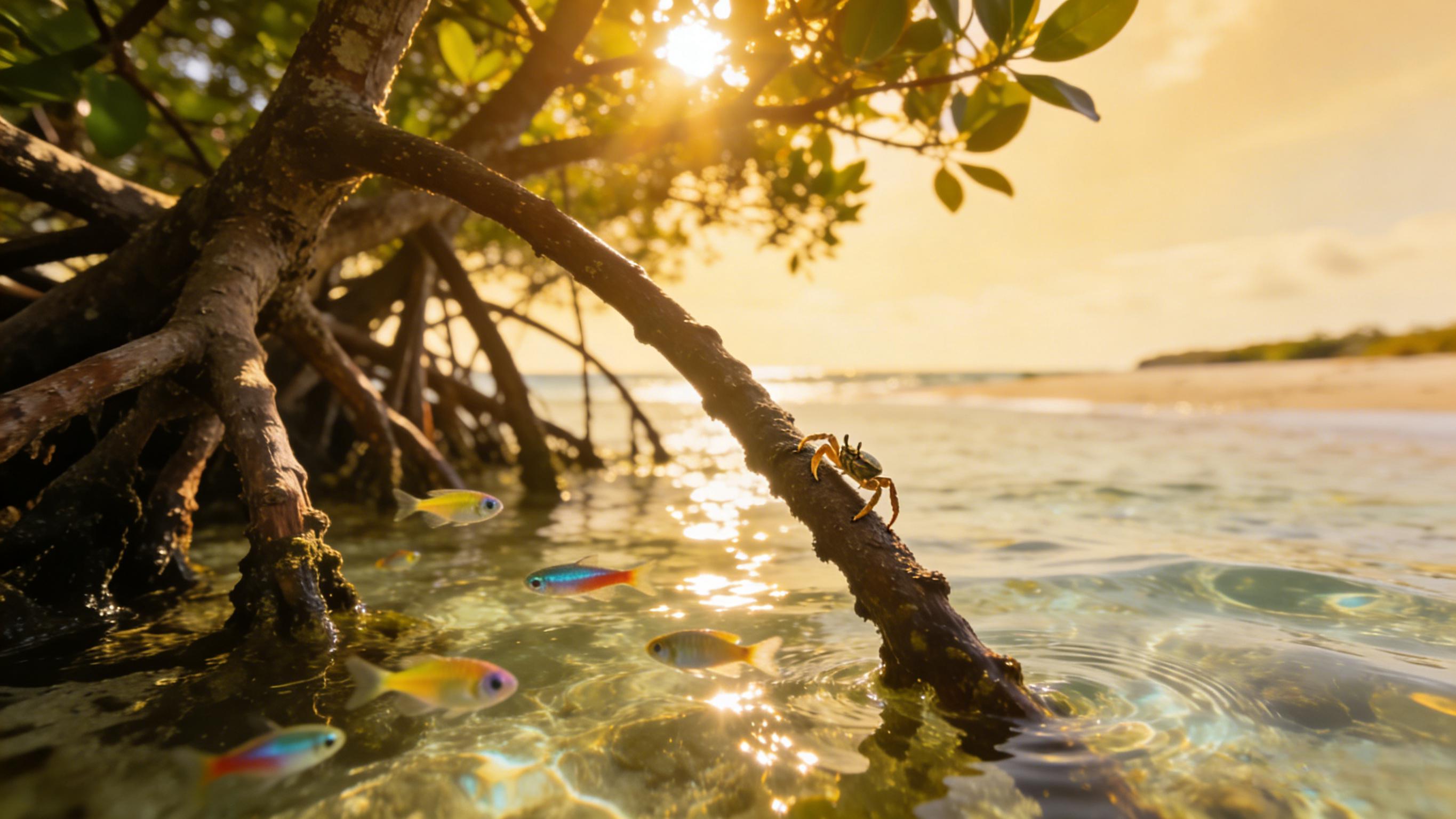
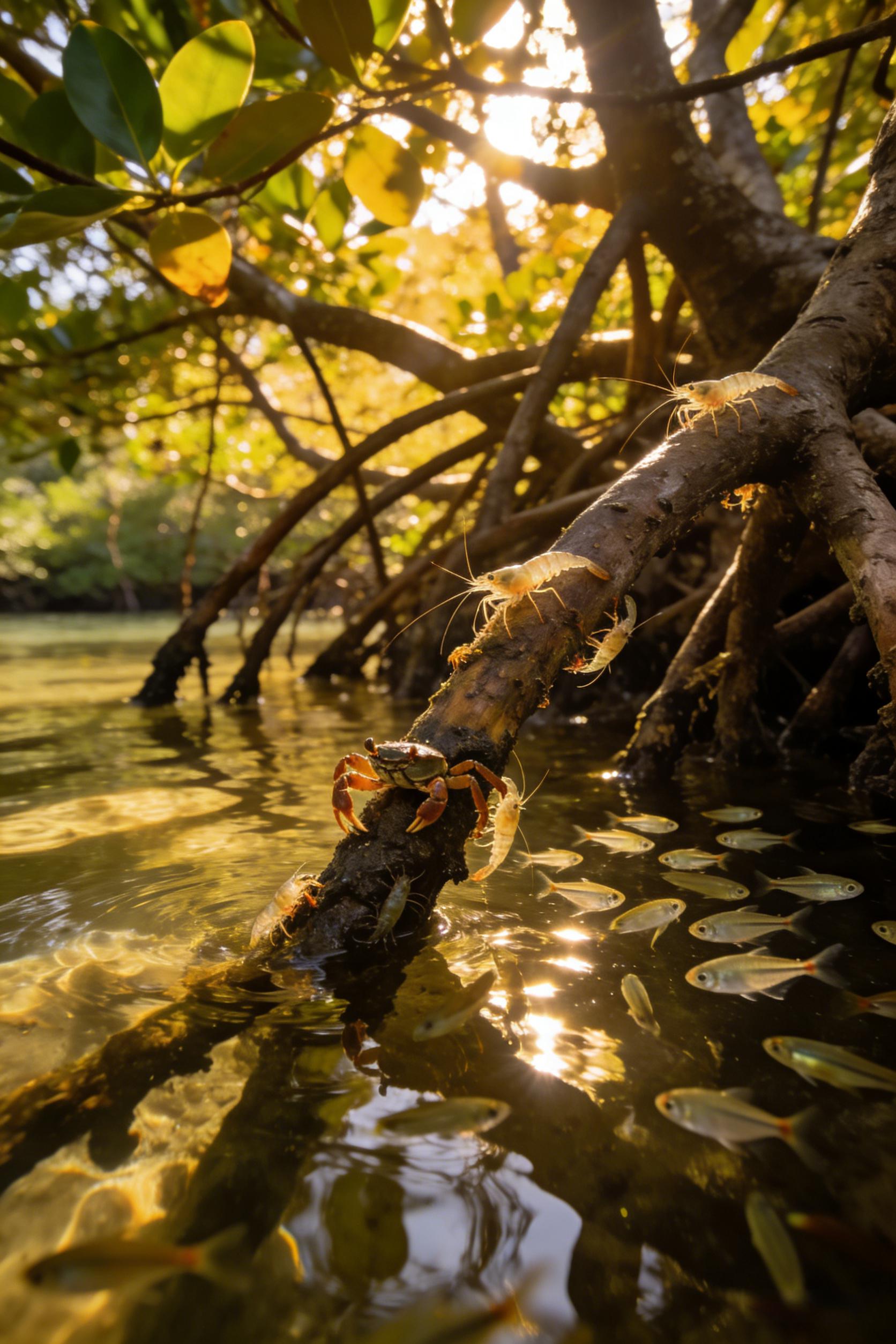
Let me take you back to my first morning in the wetlands. I woke up just as the sun was rising, pulled on my rubber boots (which, by the way, smelled of mud and saltwater), and pushed my little boat into the narrow channels between the mangroves. The air was thick with the scent of wet leaves and sea, and the sun was just peeking over the treetops, painting the water a soft gold. I paddled slowly, not wanting to startle anything—wild animals, like timid pets, need their space—and that's when I saw them. Tiny, colorful fish, smaller than my thumb, darting in and out of the tangled mangrove roots. They were so quick, so playful, chasing each other like they were playing hide-and-seek. And the little crabs—tiny blue crabs clinging to the roots, waving their small claws as if saying hello. It felt like stepping into a secret world, one that most people never get to see.
I sat there for an hour, just watching. And then something happened that made my heart clench. A small fish—so tiny it could have fit in the palm of my hand—got wedged between two roots. It struggled, panicked, and I could almost feel its fear (maybe that's the animal behaviorist in me). But before I could figure out how to help, a slightly larger fish swam over—its coloring identical to the little one, so I knew it was its mother. She nudged the little fish with her head, not pushing hard, just guiding. Over and over, until the little one slipped free. My throat tightened, and my eyes stung. It was exactly like when Grace was a tiny kitten, afraid to jump off the couch, and instead of pushing her, I knelt there, holding out my hand, saying softly, "You can do it." And finally, she did.
That's what guardianship means—whether you're a mother fish or a pet owner—not doing everything for them, but staying by their side, guiding them, letting them find their own way. You know, we spend so much time trying to "train" our pets, to "correct" their behavior, but the best thing we can do is be their safe harbor. And the mangroves? That's what they were for those fish.
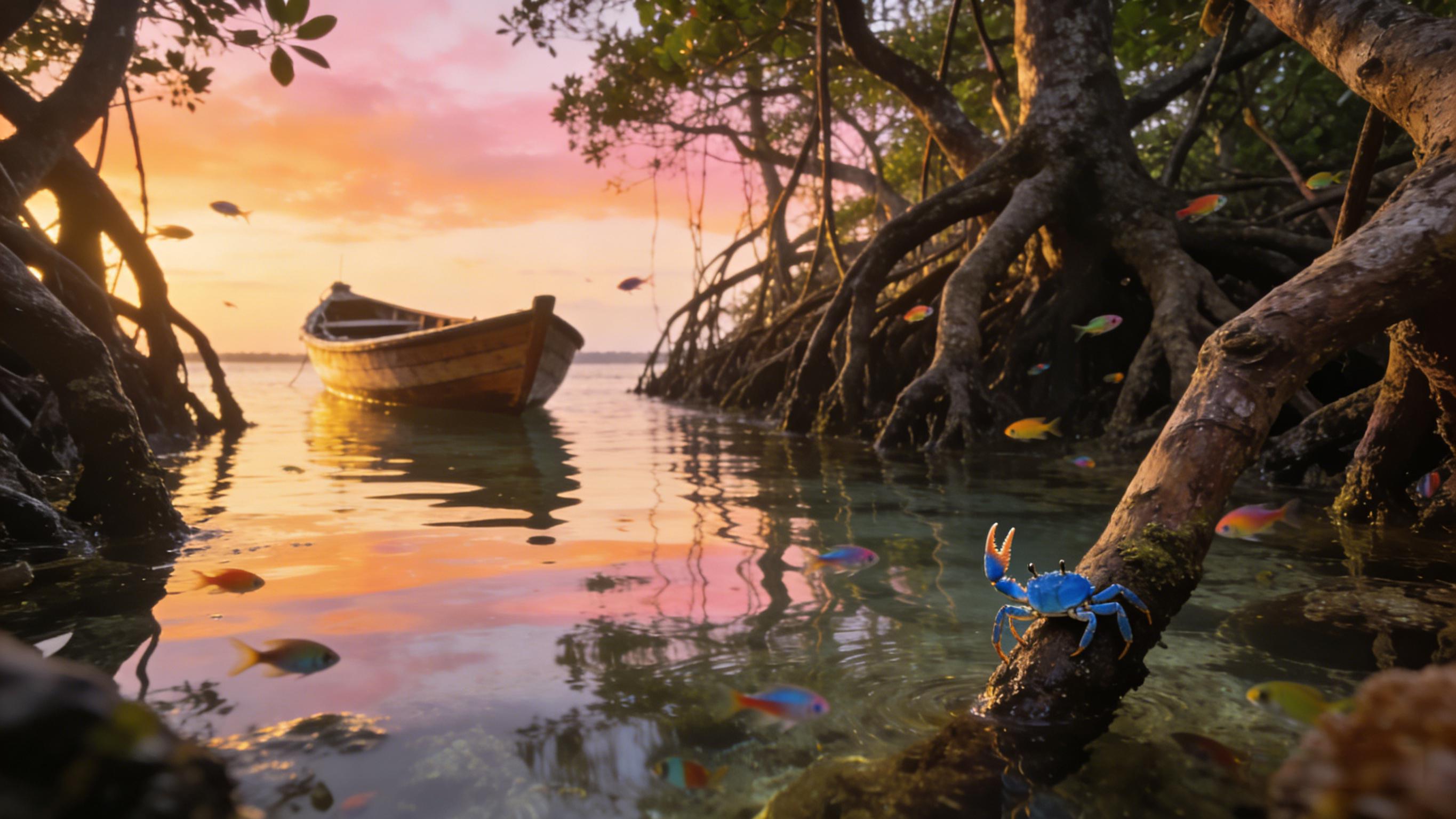
The longer I stayed, the more I noticed the quiet moments. The tangled roots forming a barrier against the waves. The fallen leaves breaking down in the water, feeding the tiny shrimp and crabs, which in turn fed the fish. A perfect cycle—each part relying on the other. It reminded me of my own home: Ollie chasing Grace around the yard, Grace stealing Ollie's treats, the two of them curled up together on the couch at night. They're not perfect, they don't always get along, but they depend on each other. Just like the mangroves and the creatures they shelter.
One afternoon, a storm rolled in. Dark clouds gathered, the wind picked up, and the mangrove leaves rustled like whispers. I huddled in my boat, worried about the little ones. But you know what? The mangroves stood firm. Their roots held tight to the ground, blocking the crashing waves, creating a calm pocket of water where the fish and crabs could take shelter. It was like watching a parent protect their child. I thought of the time a thunderstorm sent Ollie hiding in the closet, and I sat with him, holding his paw, until the storm passed. That's what we do, isn't it? We protect our pets from what scares them. We become their mangroves.
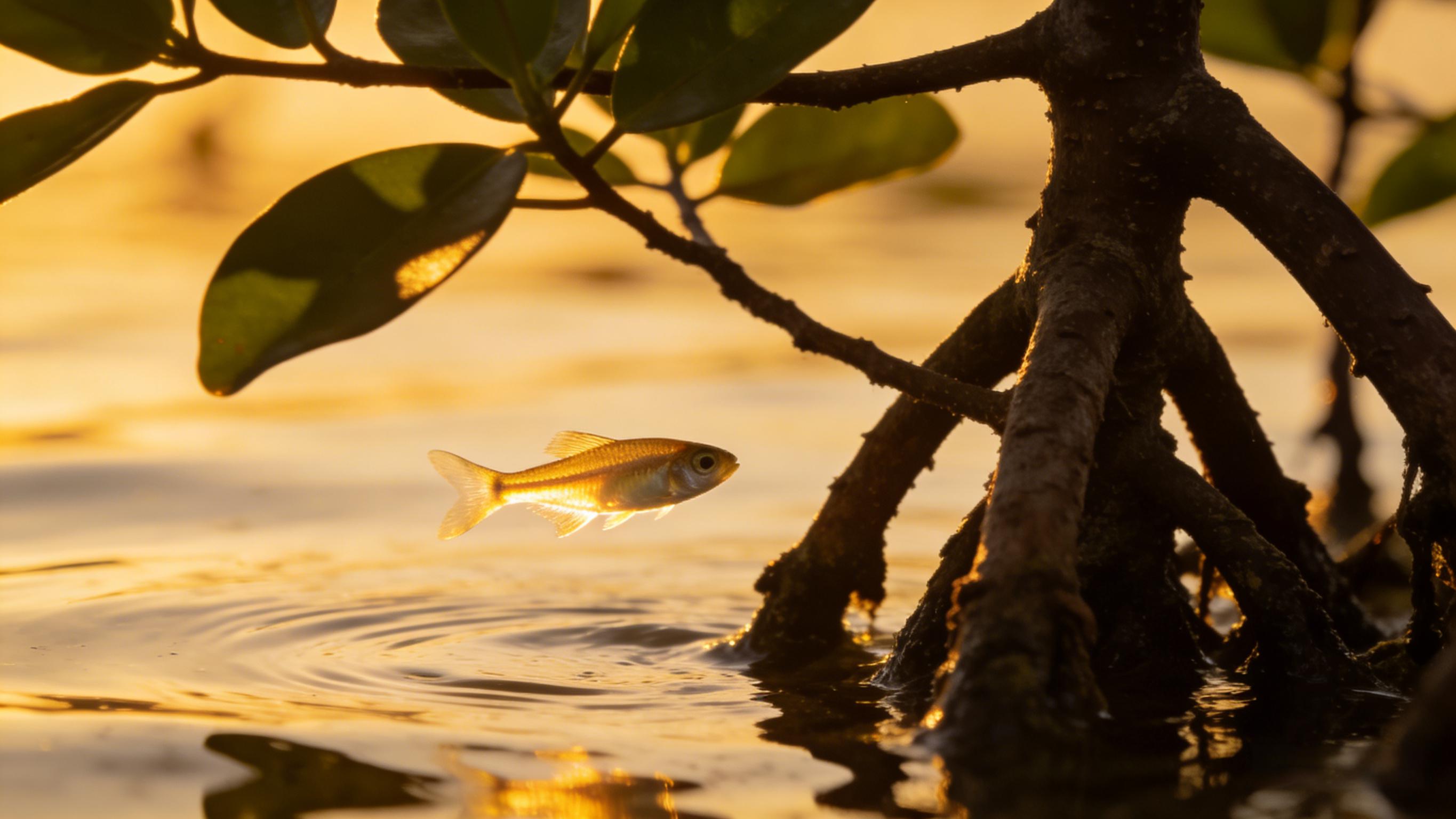
On my last day there, I sat on the edge of the wetland, watching a group of young fish swim freely, their colors gleaming in the sunlight. They were so much bigger than when I first arrived—stronger, bolder. I thought of Grace, who had gone from a timid kitten hiding under the couch to the queen of the house, ruling over everything with a hint of sass. I thought of all the rescue pets I'd helped over the years—the ones who had been hurt, scared, abandoned—and how, once they had a safe place, they slowly grew. That's the magic of the mangroves, and it's the magic of being a pet owner. It's not about grand gestures. It's about showing up, day after day, even when it's hard. It's about celebrating the small victories—the fish slipping free, the kitten coming out from under the couch, the dog finally relaxing during a thunderstorm.
Remember, "Even if today it only looks at you a moment longer before running away, that's still a victory." That's my motto, and watching those young fish grow made it feel truer than ever.
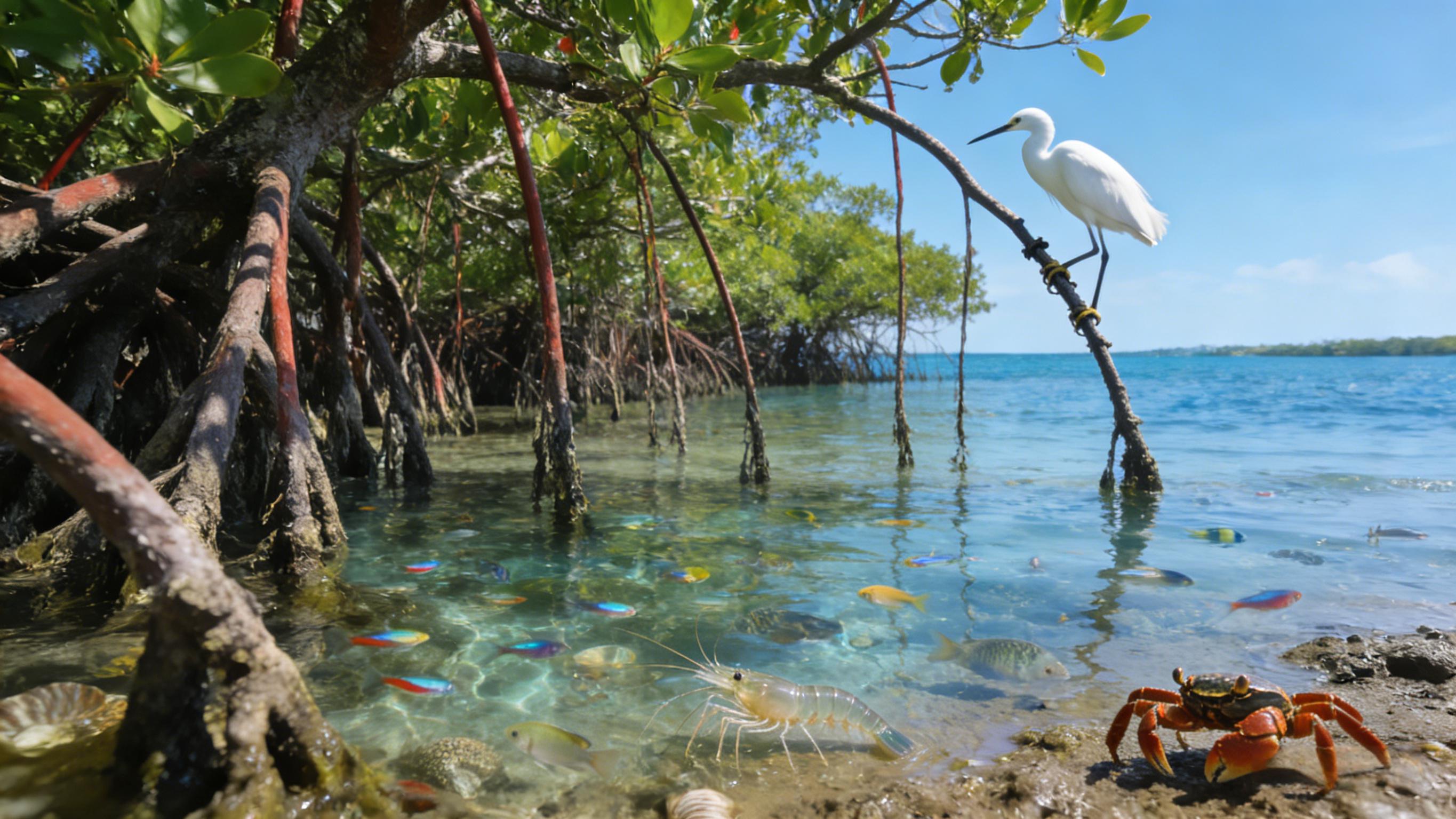
I know what you're thinking—"Evelyn, these are fish and crabs. How does this help me with my pet?" Let me tell you a story. A few weeks ago, a FaunaScan member messaged me, completely overwhelmed. Her rescue dog was terrified of loud noises—shaking, hiding at the slightest sound. She had tried everything—thunder shirts, calming sprays, even consulting her vet—but nothing worked. I told her about the mangroves, about how they don't try to "stop" the storm, but simply provide a safe place for the little ones to wait it out. I told her to stop trying to make her dog "not afraid," and instead, to be her safe harbor. To sit with him when he was scared, talk to him softly, let him know he wasn't alone.
A month later, she sent me a photo: during a thunderstorm, her dog curled up on her lap, not shaking, just resting quietly. She wrote, "He's still scared. But now he knows I'm here." That's what the mangroves taught me. Guardianship isn't about eliminating fear. It's about being there with them through it.