Forty-five days. That’s how long I spent trekking through the Himalayan snowfields, my boots crusted with ice, my camera frozen more times than I can count, and my heart full of equal parts anticipation and nervousness. I’m Lena Costa—PhD in Animal Behavior, CDBC, your go-to mentor here at FaunaScan—and I’ve spent 20 years caring for pets, rescuing scared strays, and studying animal behavior. But nothing could have prepared me for the moment I first laid eyes on a snow leopard. Not the countless research papers I’d read, not the documentaries I’d binged, not even the stories from local herders who’d spent a lifetime sharing the mountains with these elusive creatures. You see, the “King of the Snow Mountains” isn’t just a wild animal. It’s a lesson in patience, resilience, and the quiet power of guardianship—one that hit me right in the chest, because it’s the same lesson I’ve learned from my own fur babies, Ollie and Grace, over the years.
I know what you’re thinking—why travel halfway across the world to chase a cat that doesn’t want to be found? Trust me, I asked myself the same thing when I packed my bags. But here’s the thing: as pet owners, we spend so much time trying to “understand” our animals—why our dog chews the couch when we’re gone, why our cat hides under the bed during thunderstorms, why they look at us like we hold all the answers. And what I found in the mountains is that snow leopards are just like our pets, in the most beautiful way. They’re not the fierce, untouchable predators the media makes them out to be. They’re mothers who nuzzle their cubs, learners who stumble and try again, and creatures who crave safety and trust—just like Ollie, who still gets anxious when I leave the house, or Grace, who curls up in my lap like she’s still the tiny kitten I rescued 15 years ago.
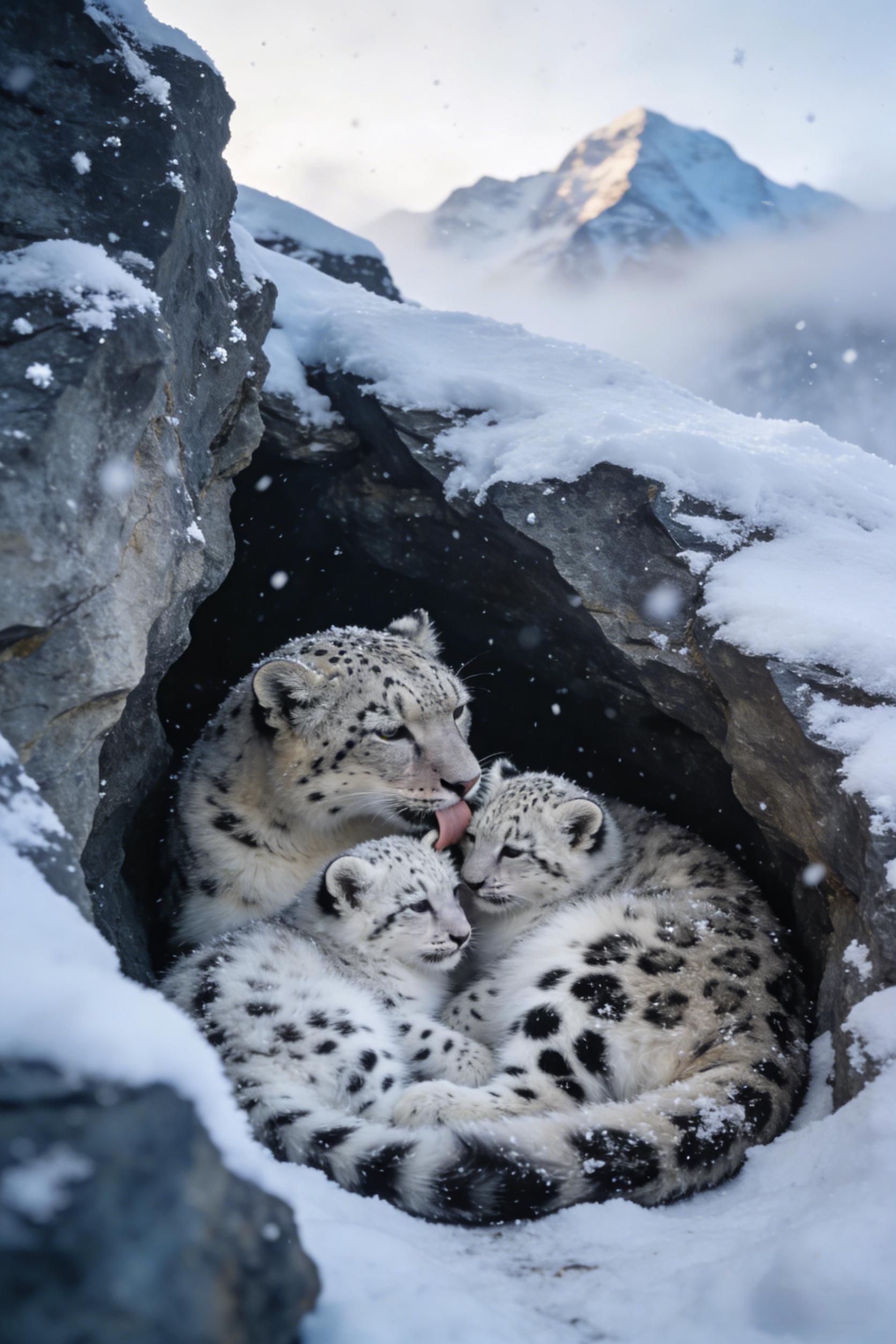
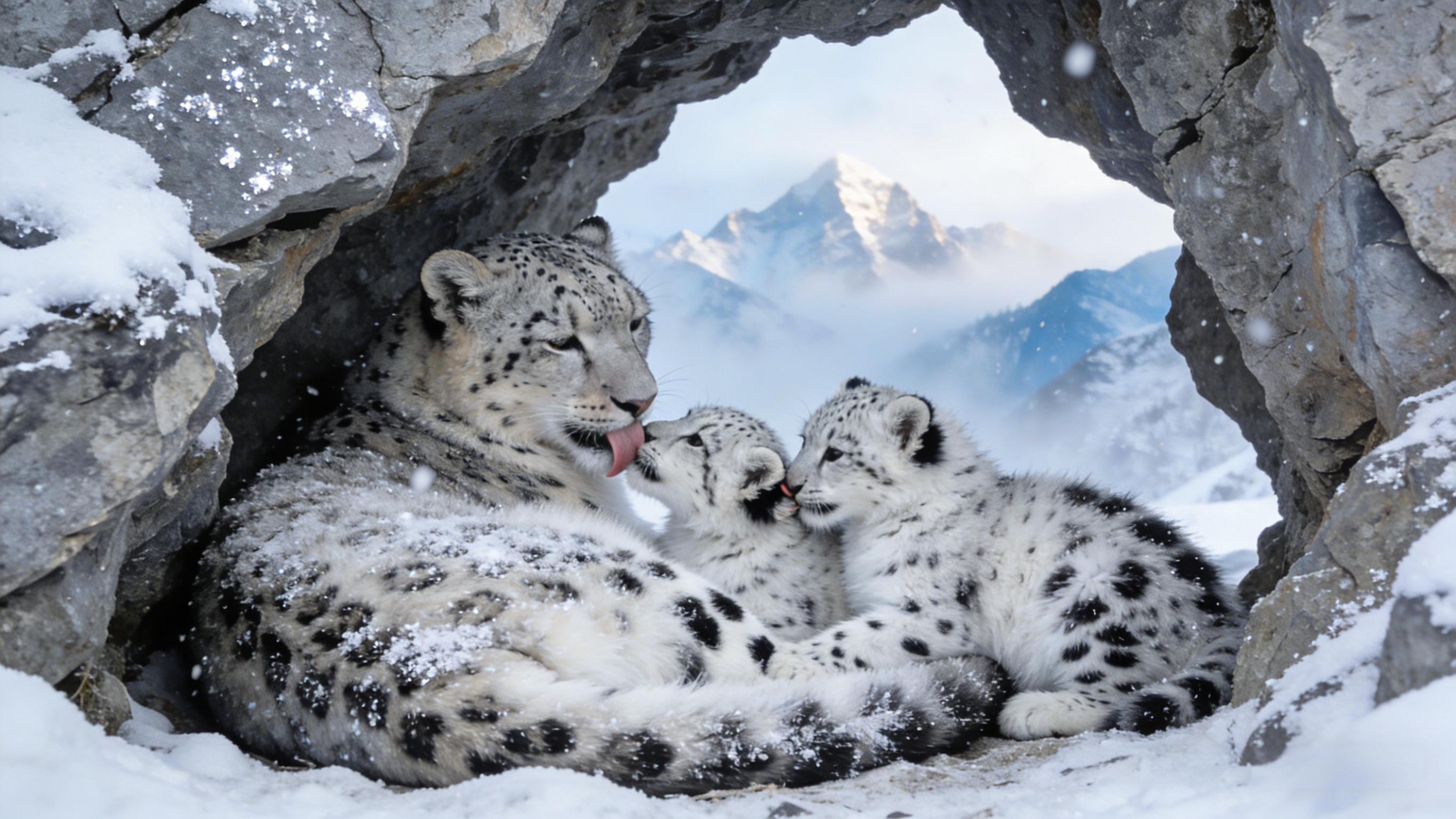
Let me take you back to day 12 of the trip. It was freezing—so cold my eyelashes stuck together when I blinked—and the wind was howling through the mountain passes. I’d been hiking for hours, my legs screaming, when I spotted something movement in a rock crevice. I froze, holding my breath (a trick I learned from working with skittish cats—slow, quiet, no sudden moves), and peeked through my camera lens. There she was: a female snow leopard, her thick gray fur dusted with snow, two fluffy cubs curled up against her chest. She was licking one of them, her tongue gentle, her eyes soft—nothing like the “ferocious king” I’d imagined. I felt a lump in my throat. It was exactly like the first time Grace had her kittens—she’d huddle in a box, growling at anyone who got too close, but when she thought no one was watching, she’d groom them so tenderly, like they were the most precious thing in the world.
I sat there for over an hour, just watching. The cubs woke up, wiggling and nipping at each other, and their mom didn’t scold them—she just watched, her tail flicking softly, like she was smiling. Then one of the cubs ventured out of the crevice, tentative, its little paws sinking into the snow. It tried to pounce on a snow hare, missed, and tumbled into a drift. I stifled a laugh—Ollie does the same thing when he chases squirrels in the yard, tripping over his own paws and bouncing back like nothing happened. The snow leopard mom didn’t rush to help. She just sat there, watching, until the cub pulled itself up and tried again. That’s when it hit me: this is what we get wrong as pet owners, so often. We rush to “fix” their mistakes, to protect them from every fall, but what they need is to try, to stumble, to learn—just like that little snow leopard. “Even if it just takes one more step forward today, it’s a victory.” I whispered it to myself, like I do every time a rescue pet makes a tiny breakthrough. And sure enough, after three more tries, that cub pounced—and missed again. But it didn’t give up. Neither did its mom. Neither do we, when we love our pets.
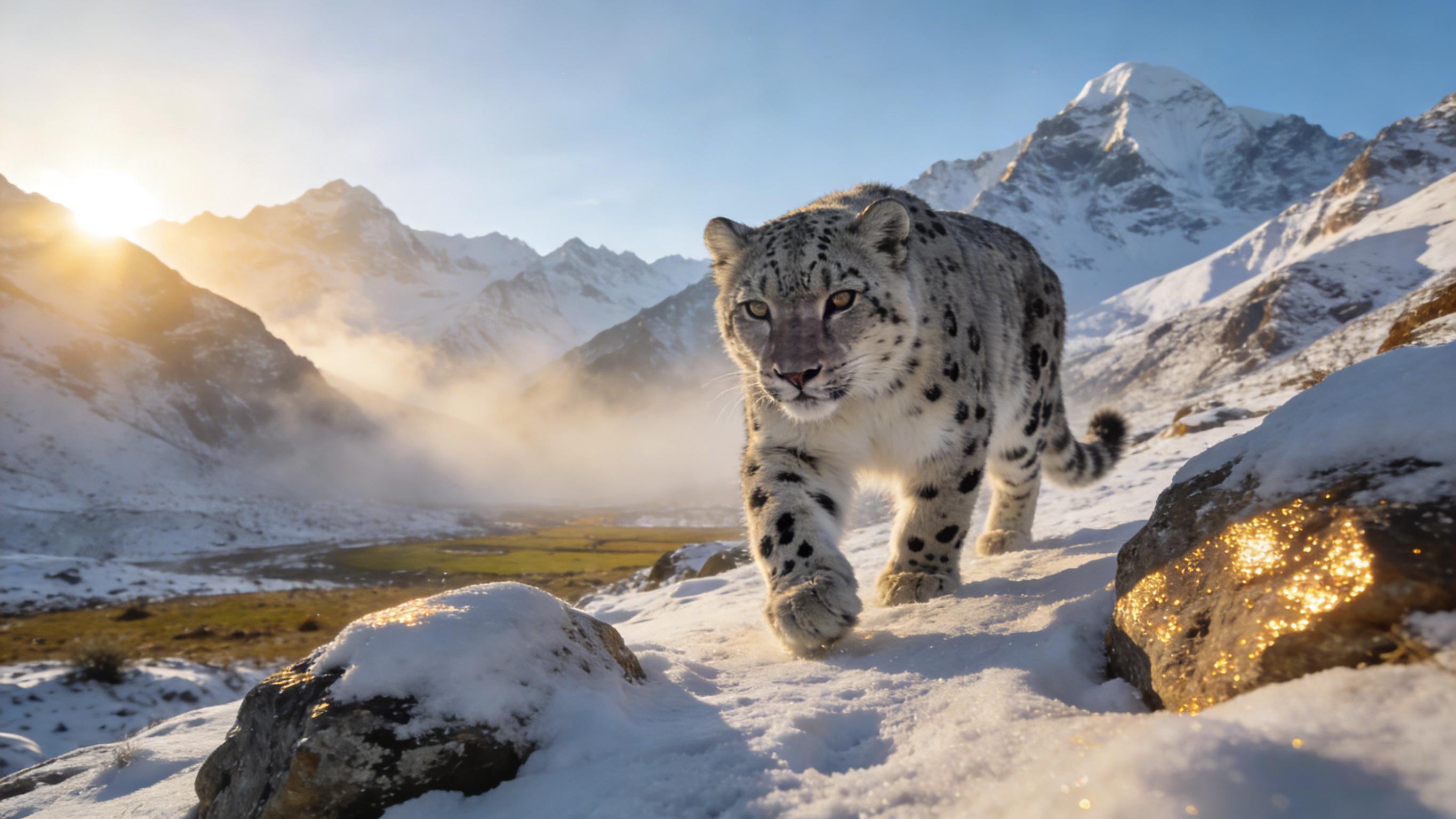
One of the hardest parts of the trip? Keeping my distance. Snow leopards are skittish—they’ve learned to fear humans, and for good reason. Habitat loss, poaching, climate change—we’ve hurt them, time and time again. So we had to wear neutral-colored clothes, move slowly, even hold our breath when we got too close. It was frustrating, at first. I wanted to reach out, to touch that soft fur, to tell them we’re here to help. But then I thought of Ollie, when I first rescued him. He was so scared, he’d hide in the closet for days, refusing to eat. I didn’t force him to come out. I left food by the door, talked to him softly, sat on the floor and read books, just so he’d know I wasn’t a threat. It took two weeks for him to even peek his head out. Trust takes time—whether it’s a scared rescue dog or a wild snow leopard.
On day 38, I had a moment that I’ll never forget. I was setting up my camera near a snowfield when I heard a soft mew. I turned, and there was that same little cub from day 12, now a bit bigger, a bit braver, standing just a few feet away. It didn’t run. It just looked at me, its eyes wide, like it was trying to figure out if I was friend or foe. I held out my hand, palm up, slow, just like I do with nervous cats. And you know what? It took a step forward. Just one. Then it froze, then took another. I didn’t move. I didn’t breathe. For a second, we were just two creatures, sharing a moment in the snow—no labels, no fear, just connection. That’s the magic of animals, isn’t it? They don’t care about our degrees, our titles, our mistakes. They care about whether we’re kind, whether we’re patient, whether we see them. That’s the same with our pets. They don’t care if we’re perfect. They just care that we’re there.
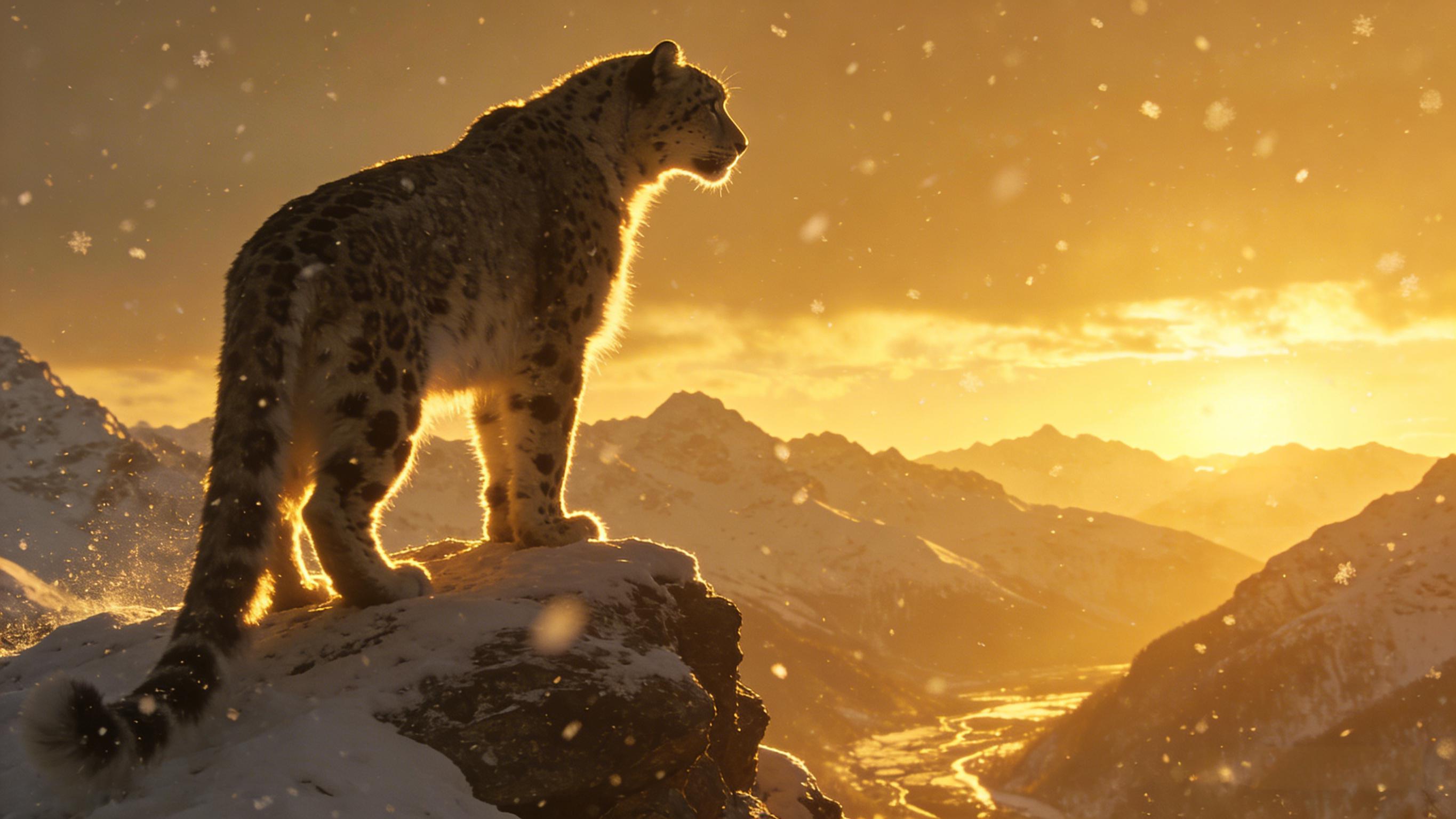
I know a lot of you are here because you’re struggling with your own pets—maybe you have a scared rescue, a pet with separation anxiety, or a senior fur baby who’s slowing down. I get it. I’ve been there. I spent 12 months working with Ollie on his separation anxiety, and there were days I wanted to give up—days when he’d destroyed my couch, peed on my bed, barked for hours on end. But then, one day, I came home, and he wasn’t barking. He was lying on the couch, holding his favorite toy, waiting for me. That’s the moment I realized: guardianship isn’t about being perfect. It’s about showing up, even on the hard days. It’s about celebrating the tiny wins—the step forward, the quiet wait, the first time they trust you enough to let their guard down. [Image Generation Prompt 3: 16:9, no text, golden sunset casting a warm glow over the snow-capped mountains, a snow leopard stands on a rocky outcrop, its silhouette tall and graceful, looking out over the valley below, its fur glowing in the light, snowflakes drift gently around it. The scene is serene and hopeful, capturing the beauty and resilience of snow leopards. This picture is used to remind us that every life—wild or domestic—deserves to be protected, and that our love and patience can make a difference.]
When I left the mountains, I cried. Not because I was sad to go, but because my heart was full—full of awe, full of hope, full of a deeper understanding of what it means to love and protect another creature. Snow leopards aren’t just “kings of the snow mountains.” They’re teachers. They teach us that patience is more powerful than force, that trust is earned, not given, and that love—whether for a wild cat in the Himalayas or a dog on your couch—is the most powerful force in the world.
So the next time you’re feeling frustrated with your pet—when they’re scared, when they’re slow to learn, when they’re not “perfect”—remember that little snow leopard, stumbling in the snow, trying again and again. Remember that trust takes time. Remember that every tiny step is a victory. And most of all, remember this: love it, starting with understanding its silence. Whether it’s a snow leopard in the mountains or a fur baby in your lap, they’re trying their best. And so are you. That’s more than enough.