In this essay, I want to share with all animal lovers the mysterious creatures that belong only to the Galápagos, and the insights they offer us as pet owners. May we all come to understand the uniqueness and preciousness of every life.
Three years ago, I packed my backpack, grabbed my old camera—the same one I used while working with the San Diego Zoo Wildlife Alliance—and boarded a small plane bound for the Galápagos Islands. I had waited ten years for this trip—ever since I first saw a photo of a Galápagos giant tortoise in an animal behavior textbook during college, its moss-covered shell moving so slowly it seemed to make time stand still. As I looked out the window at the deep blue sea gradually giving way to volcanic islands, my heart pounded. You know that feeling, right? That restless excitement, like a child on Christmas Eve waiting to unwrap a long-awaited gift. That was me—because I knew I was about to meet creatures found nowhere else on Earth, the very ones that had inspired Darwin himself. And as a pet owner (I have to mention my mischievous border collie Ollie and my grumpy old cat Grace), I knew this trip would change the way I saw all animals—including my own pets.
I'm Elias Hunter, PhD in Animal Behavior from UC Davis, an internationally certified pet behavior consultant, and your lead mentor in the FaunaScan community. For twenty years, I've raised all kinds of pets—timid stray cats, high-energy puppies, even a grumpy old rooster that would eat nothing but sunflower seeds. But for the past decade, I've split my time between helping pet owners with their "problem" pets (trust me, I've seen it all—from dogs chewing through drywall to cats hiding under the bed for weeks) and studying wildlife in their natural habitats. The Galápagos trip? A journey I made willingly. I stayed for a month at a small eco-lodge on Santa Cruz Island, waking up before dawn every day, hiking through grasslands and coastal rocks with my camera, hoping for just a glimpse of these mysterious creatures. And let me tell you—they did not disappoint.
Today, I'm not here to throw scientific jargon at you. No lectures on "adaptive radiation" or "sympatric speciation." I'm here to share the chaotic, beautiful, and often hilarious stories from my time on the islands—the moments that made me laugh, moved me, and deepened my love for the animal kingdom. Because that's what FaunaScan is all about, isn't it? Connecting through our shared love of animals, supporting one another, and remembering that even the smallest, most mysterious creatures have something to teach us. My motto says it best: "Even if today it only looks at you a moment longer before running away, that's still a victory." (Sorry, old habit—I get excited and slip into Chinese.) But it's true—every encounter with an animal, whether wild or domestic, is a victory. A chance to connect, to learn, to grow.
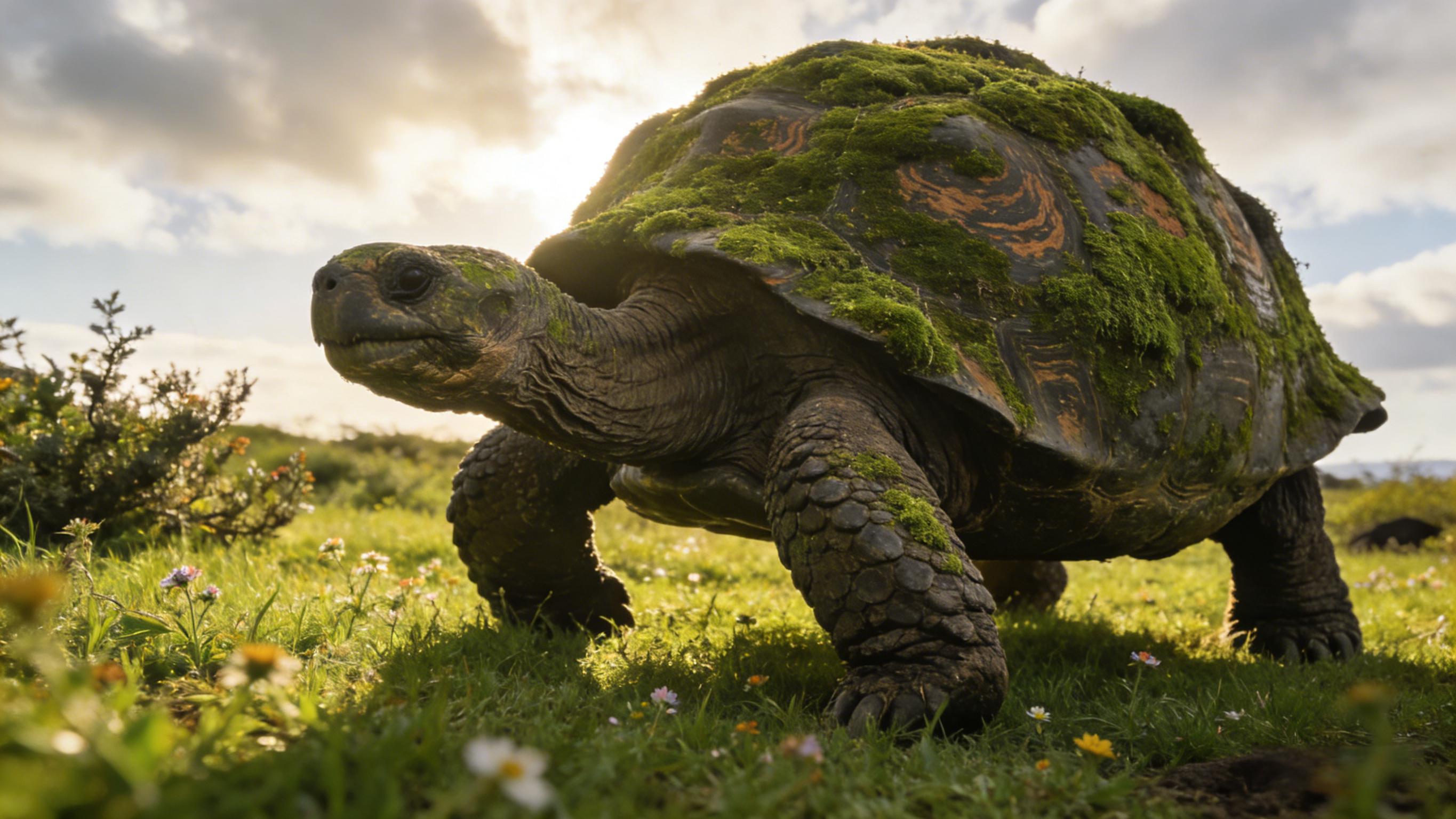
Let me start with the Galápagos giant tortoise—my favorite among all the residents of the islands. I first met one on my third day on the island, while hiking in the highlands of Santa Cruz. I was walking along a dirt path, listening to the birds chirping, when I heard a faint "thump, thump, thump" ahead. I stopped, held my breath, and slowly peered out from behind a bush—and there it was. A giant tortoise, easily weighing over 200 pounds (about 90 kilograms), its shell covered in thick green moss, moving so slowly that I could walk alongside it without any effort. I sat down on the ground (always crouch or sit when approaching wildlife—remember, eye level is key) and watched it for over an hour. It ambled slowly toward a patch of grass, lowered its head, and began to nibble, its neck stretching out long and slow like a snake in slow motion.
But what textbooks don't tell you is this: these tortoises are absolute foodies. I watched this one abandon a patch of dry grass and crawl ten feet (about three meters) just to get to a fresher clump—like a kid refusing vegetables and waiting for dessert. I even saw one stop halfway, tilt its head to look at me, as if I had interrupted its snack time. Honestly, it was hilarious. But it also reminded me of my old cat Grace—she does the same thing, turning her nose up if her kibble isn't fresh enough. We always think of wild animals as "fierce" and "primitive," but they're really no different from our own pets—they have preferences, personalities, and even quirks.
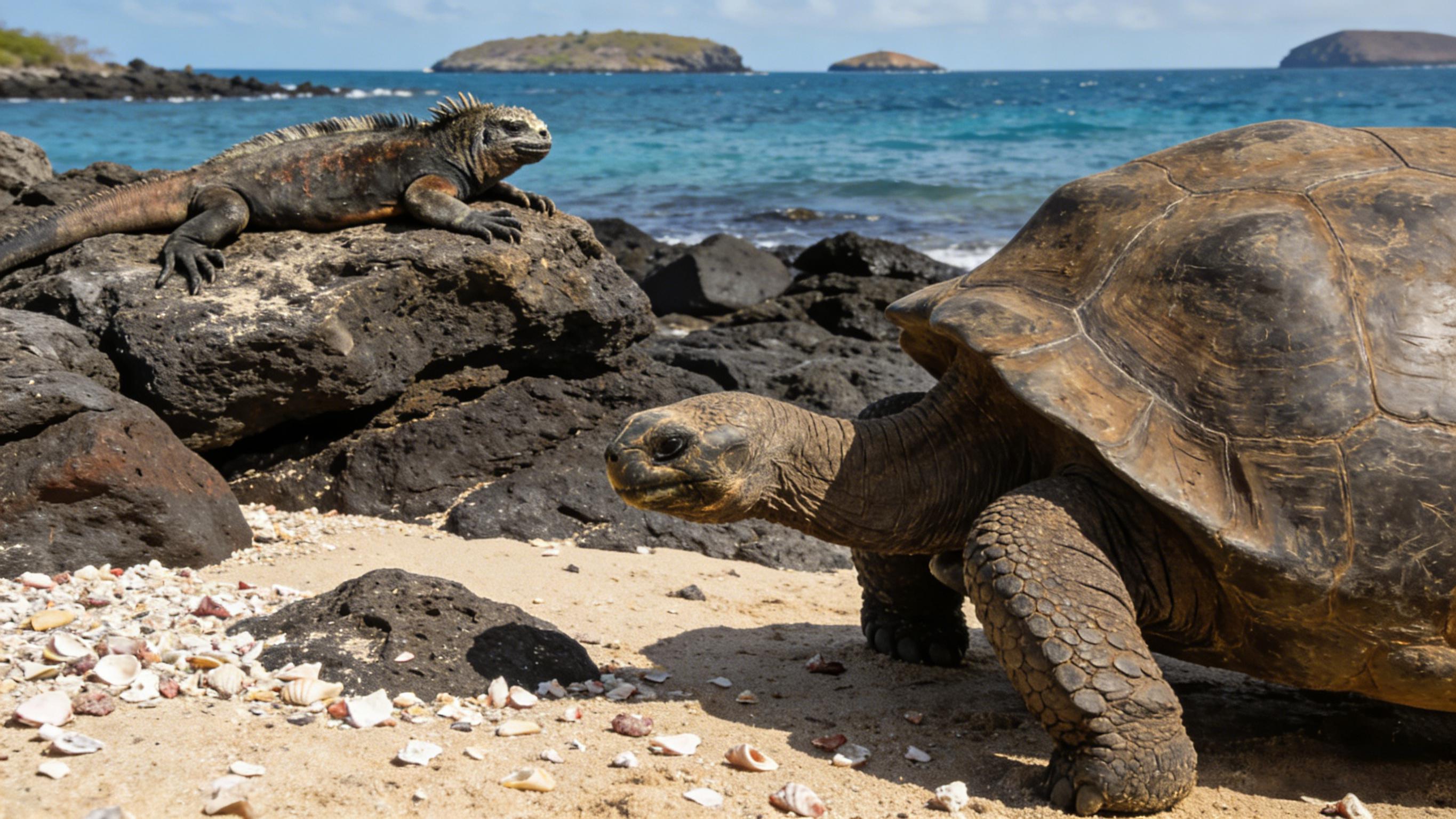
Now, about the marine iguanas—these creatures are the epitome of "cute with a tough exterior." Honestly, the first time I saw one, I thought it was a little dinosaur. Black scales, spiny crests along their backs—they looked like they could bite your hand off. But guess what? They're actually incredibly gentle. I spent an entire morning on the coast of Fernandina Island watching dozens of marine iguanas basking on the black volcanic rocks. They would stretch out their limbs, close their eyes, and just… zone out. It was like a massive iguana beach party. And when they got hungry? They'd waddle to the water's edge, dive in, swim like little black torpedoes, and graze on algae. I even saw one pop its head out of the water, shake off the droplets, and look around as if it were proud of itself.
And the funniest part? They sneeze. A lot. Because they swallow seawater while eating algae, and they have specialized glands to expel the salt—so they sneeze out tiny salt crystals. I swear, it's the cutest thing you'll ever see. I sent a video to my sister (a devoted dog owner), and she texted back, "My dog sneezes like that when he's excited—same energy!" See? Even wild animals have habits that remind us of our own pets. That's the magic of it.
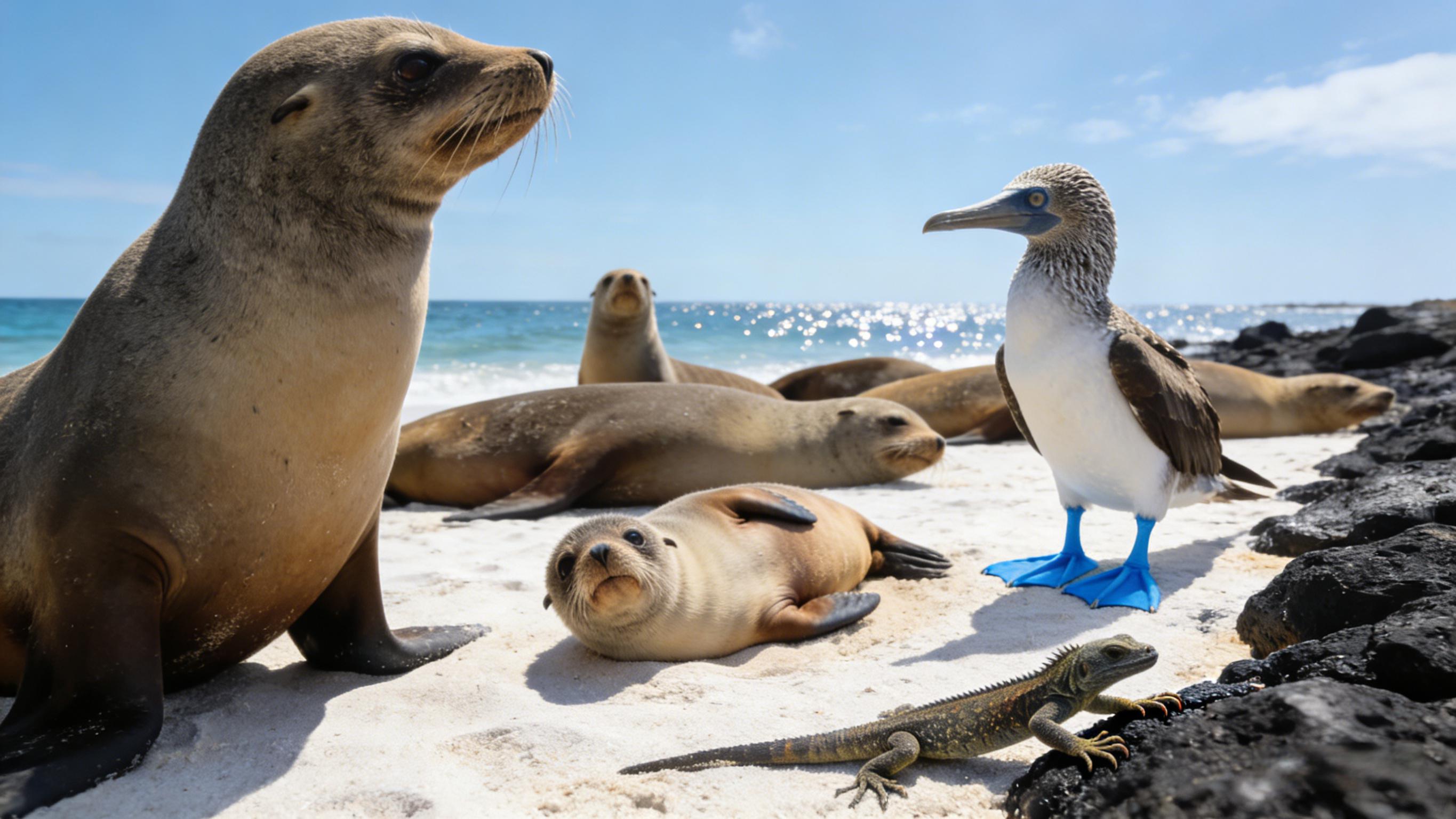
But tortoises and iguanas aren't the only stars of the show. Of course not—these islands hold so many hidden treasures. Take the blue-footed boobies, with their bright blue feet—neon blue, visible from a mile away. Their courtship dance is absolutely hilarious (in the best way). The males puff out their chests, lift one bright blue foot, then the other, swaying back and forth as if to say, "Look at my fancy feet! Pick me, pick me!" I watched one male dance for twenty minutes, only to have the female turn and walk over to another male. Poor guy—it felt like watching a romantic comedy.
Then there are the Galápagos sea lions—they're like golden retrievers of the ocean. Playful, curious, and always looking to join the fun. One afternoon, as I sat on a beach, a young sea lion waddled up to me, nudged my hand with its nose, rolled onto its back, and waited for a belly rub. I couldn't resist—I gave it a gentle scratch, and it let out a soft, puppy-like bark. Those are the moments that make you forget all your worries—just you and a small, curious creature, connecting.
And the lava lizards—they're masters of disguise, their brown-black bodies blending perfectly into the volcanic rock. I nearly stepped on one until it moved—scared the heart right out of me!
I know what you're thinking—"Elias, these are wild animals. How does this help me with my pet?" Let me tell you a story. A few months after I returned from the Galápagos, a FaunaScan member reached out to me, completely desperate. Her dog, a rescue German Shepherd named Max, was afraid of everything—loud noises, strangers, even his own shadow. She said she had tried everything and was ready to give up.
I told her about the marine iguanas—those creatures that look fierce but are actually gentle, the ones that need time to adjust to new things. I told her about the tortoises—how they move slowly but keep going, even when things get tough. I said, "Max isn't 'difficult'—he's like those iguanas. He needs time to feel safe. Even if he takes just one small step forward, that's a victory."
She took my advice, stopped pushing Max, and started taking things slowly. A month later, she sent me a photo: Max lying on the couch, curled up beside her, his head resting on her leg. She wrote, "He finally let me pet him. It's small, but it's a victory." That's the point. The animals of the Galápagos aren't just mysterious creatures—they're teachers. They teach us patience, empathy, and the importance of taking things one step at a time. Just like our pets.
And to my fellow animal lovers and pet owners—you know who you are—this trip taught me something important: all animals, whether wild or domestic, deserve our respect and kindness. We spend so much time trying to "train" our pets to fit into our lives that we sometimes forget to slow down and see them for who they really are—individuals with their own personalities, fears, and joys.
The tortoise taught me that slow and steady wins the race. The marine iguana taught me not to judge a book by its cover. The blue-footed booby taught me to embrace the silly, joyful parts of life. And isn't that what having a pet is all about? Learning from each other, growing together, and celebrating every small victory.
I still flip through my Galápagos photos every week—especially that grumpy-looking tortoise, glancing sideways at me as it munched on leaves. It reminds me why I do this work. Why I spend hours replying to comments on FaunaScan, why I founded the "PawConnect" stray animal rehabilitation program, why I've dedicated my life to helping pets and their owners. Because every animal, big or small, wild or domestic, has a story to tell. And it's our job to listen.
So next time you feel frustrated with your pet—when they chew your shoes, when they hide from you, when they just won't listen—think of the Galápagos. Think of the slow-moving tortoise. Think of the gentle iguana beneath its fierce-looking scales. Remember that every small step, every little victory, is worth celebrating. Because as I always say: love begins when you learn to listen to its silence. Whether it's a tortoise in the Galápagos or a little Chihuahua on your couch—every animal has something to say. All you need to do is quiet your mind and listen.