The air here smells different than the deep boreal forests I'm used to. Less pine resin, more damp earth and... kibble? It's a strange mix. I'm standing just outside the chain-link fence of the neighborhood animal shelter, but my feet are planted in the community park that wraps around it. Sunlight is dappled, soft and forgiving. It's quiet, mostly. Just the rustle of dry oak leaves skittering across the pavement and the distant, rhythmic chirping of a house sparrow.
I came here to help. Just a few hours of volunteering. But then I saw them. The "mystery" dogs.
You know the type. In the wild, a wolf is a wolf. A lynx is a lynx. The lines are drawn by evolution, sharp and clear. But here? In the urban jungle of rescue animals? It's a blur. A beautiful, confusing blur. I looked at a scruffy terrier mix with ears that couldn't decide if they wanted to stand up or flop down. Next to it, a gentle giant with the eyes of a hound but the coat of a shepherd.
The pain point hit me instantly. Hard. The shelter staff, bless their hearts, were overwhelmed. "We think he's part Beagle," one volunteer sighed, scratching behind the floppy-eared dog's ear. "But maybe Boxer? Or Poodle?" They didn't know. And because they didn't know, they couldn't truly know how to care for him. What kind of energy does he have? Is he prone to hip issues? Does he need high-protein food or a specific grooming routine? Without knowing the breed makeup, it's all guesswork. It's like trying to photograph a bird in flight without knowing its speed—you miss the shot. You miss the nuance.
I felt that familiar itch. The curiosity. The need to know.
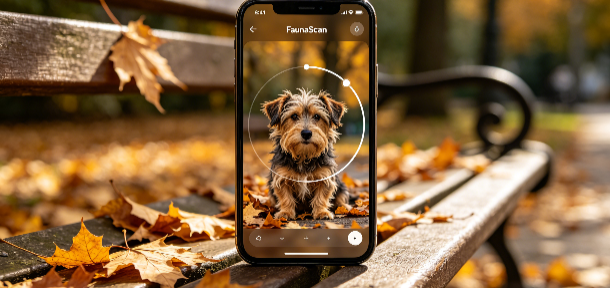
So I pulled out my phone. Not my camera today, but my other lifeline. FaunaScan.
I've used this tool in the Yukon to track caribou migrations, to identify rare mosses on rocky outcrops. But using it here, on a shivering rescue pup in a city park? It felt... pivotal. I crouched down. The grass was cool against my knees. The dog, let's call him Barnaby, trotted over. His fur was coarse, a patchwork of wire and soft undercoat. I reached out, my fingers sinking into that tangled warmth. He leaned into my hand. Trusting.
"Let's see who you really are, buddy," I whispered.
I snapped a photo. Clear focus on the muzzle, the ear set, the body structure. Uploaded it to FaunaScan. The wait was barely a second. Just a heartbeat.
Processing...
And then, the result popped up.
Wow. Just... wow.
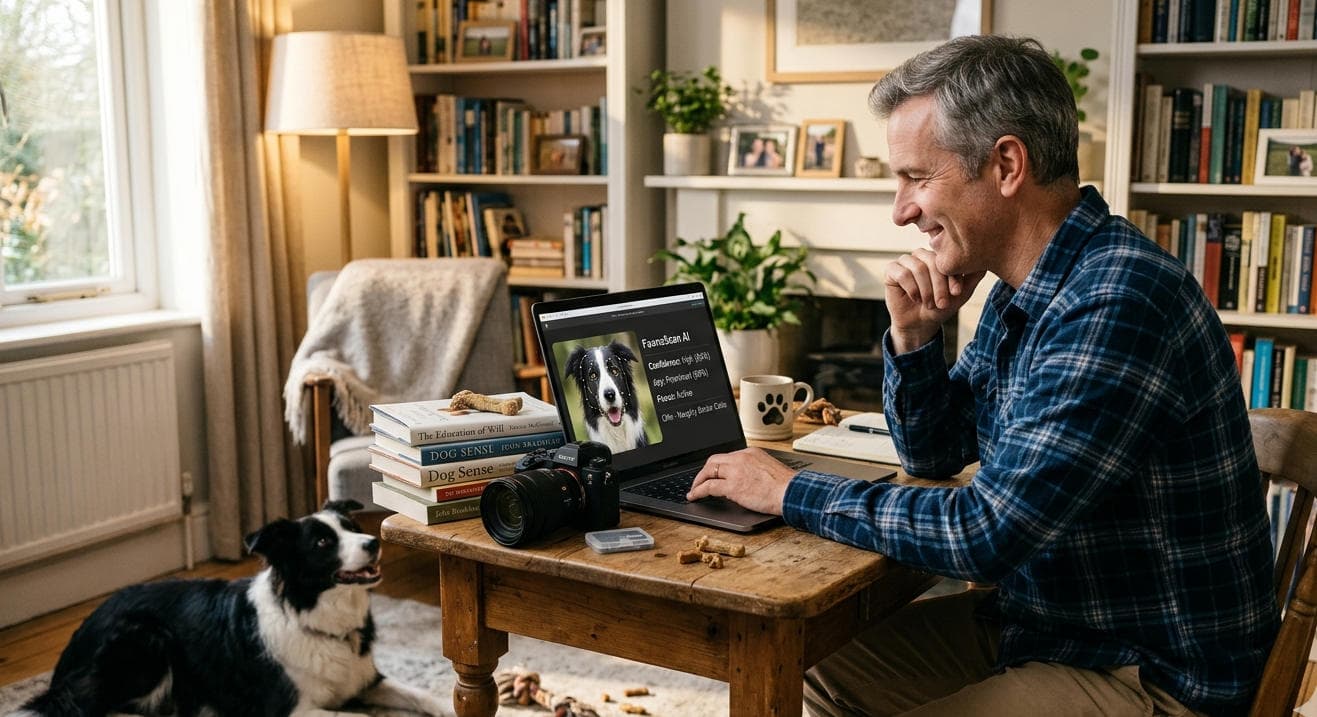
It wasn't just a guess. It was a breakdown. 40% Border Collie, 35% Jack Russell Terrier, 25% unknown heritage. The accuracy? FaunaScan boasts a 95% success rate even with complex mixes, and looking at the detailed genetic markers it highlighted, I believed it. It saw what my eyes couldn't. It saw the herding stance in the way Barnaby held his tail. It saw the terrier tenacity in the set of his jaw.
But here's the kicker—the part that makes my heart race a little faster. The app didn't stop at names. It immediately spat out behavioral traits and care suggestions tailored to that specific mix. High energy herding instinct, it warned. Needs mental stimulation to prevent anxiety. Prone to patellar luxation due to terrier lineage.
Suddenly, Barnaby wasn't just a "cute stray." He was a puzzle solved. The shelter staff gathered around, eyes wide. "That explains why he tries to herd the cats!" one laughed, relief washing over her face. "And the knee issues... we need to watch his jumping."
It's magical, really. To hold this small rectangle of glass and metal—cool to the touch, sleek—and have it unlock the story of a life.
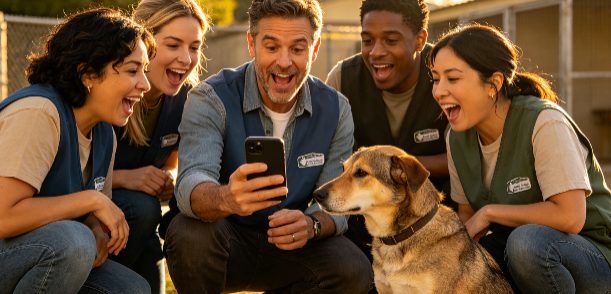
A breeze picked up, swirling a cluster of red maple leaves around our boots. The sparrow stopped singing for a moment, then started again, louder.
I looked at Barnaby again. Really looked at him. Now I knew why he paced. Now I knew why he was so intense. It wasn't "bad behavior." It was biology. It was history.
We spent the next hour scanning the other residents. A cat with distinct Siamese coloring but a Persian frame turned out to be a rare mix requiring specific dental care. Another dog, seemingly generic, showed high Greyhound ancestry, meaning he needed a warm coat for winter walks.
It's incredible how much uncertainty weighs on these places. How much energy is wasted guessing. FaunaScan cuts through that fog. It's not just tech; it's empathy in digital form. It gives these animals a voice, a definition, a path to a better life.
I packed up my phone. The battery was low, but my spirit? Full.
Barnaby licked my hand, his tongue rough and warm. He didn't know he'd just been decoded. He just knew someone cared enough to look closer.
I walked toward the gate, the gravel crunching softly under my boots. The sun was dipping lower, casting long, golden shadows across the park. I paused, looking back at the kennels. Somewhere in there, a thousand stories were waiting to be read.
I just hope someone takes the time to scan them.
To really see them.
The wind shifted again, carrying the scent of rain. Time to go. But I'll be back. Tomorrow. With a full battery. And maybe some treats for the Border-Terrier-Collie mix who finally knows who he is.