We always say we want to take our children into nature, help them understand animals, get them outdoors and away from electronic devices—but actually doing it feels so difficult. Either work is too busy to find time to take the kids out to the countryside, or we don't have professional knowledge about animals, so when the children ask questions, we can only stammer and stumble. Or we simply don't know where to start, and after taking the kids out, we just wander aimlessly without learning anything, wasting precious parent-child time.
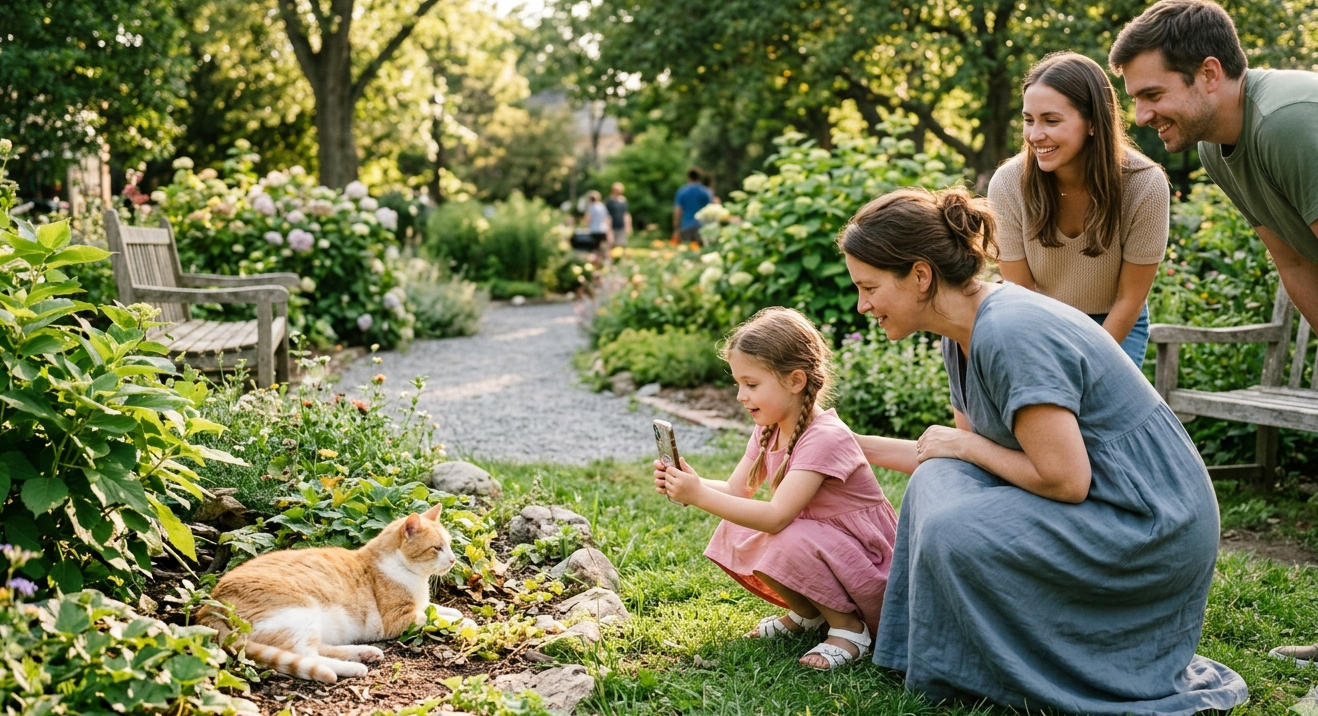
On the afternoon of March 24th, I was sunbathing with my old cat in our neighborhood's enrichment garden—she's that 12-year-old orange-and-white cat who walks slowly and loves to nap in the grass. A young couple from next door came over with their six-year-old daughter, Duoduo. The moment Duoduo saw the cat, her eyes lit up, and she crouched beside her, firing off questions: "Auntie, what breed is this kitten? Why does she keep squinting? What does she like to eat?" The couple stood beside her, looking embarrassed and scratching their heads, murmuring quietly: "We don't really know. We haven't learned much about these things. Every time she asks, we can't give her an answer." In that moment, I felt such a strong sense of recognition—I'm sure many parents have had experiences just like this, right?
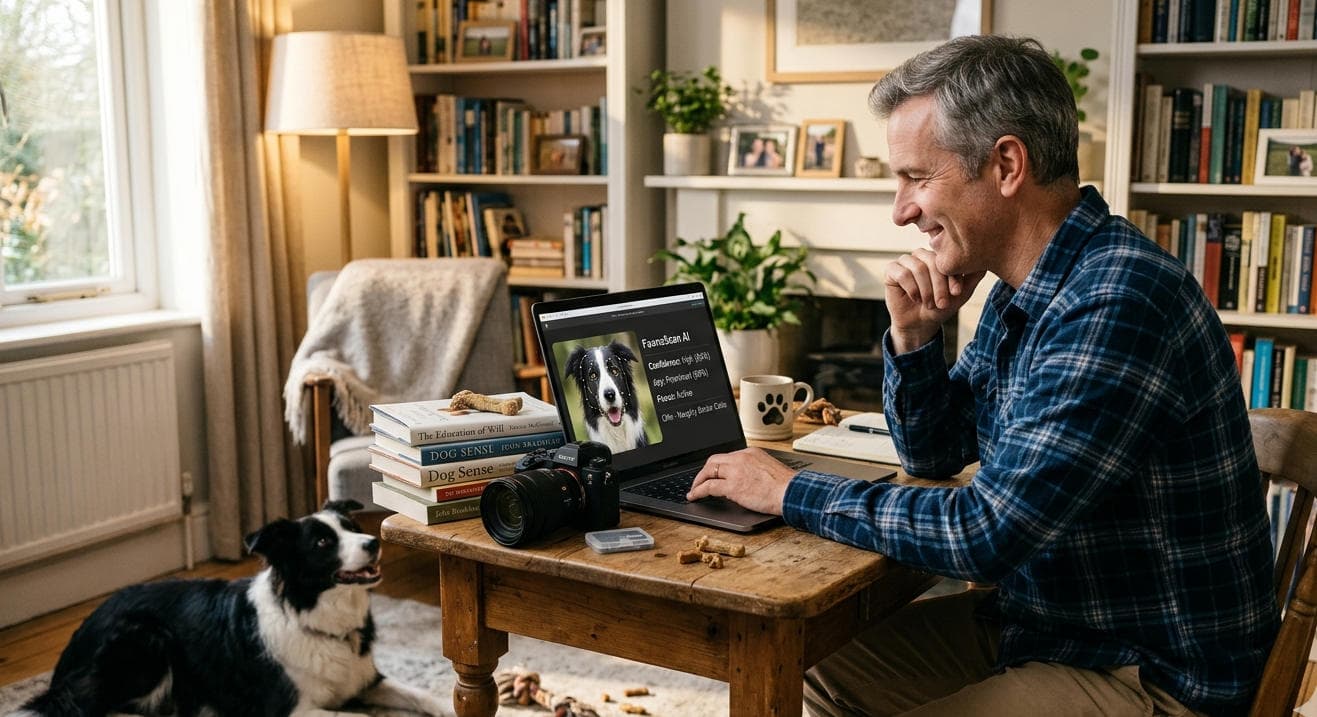
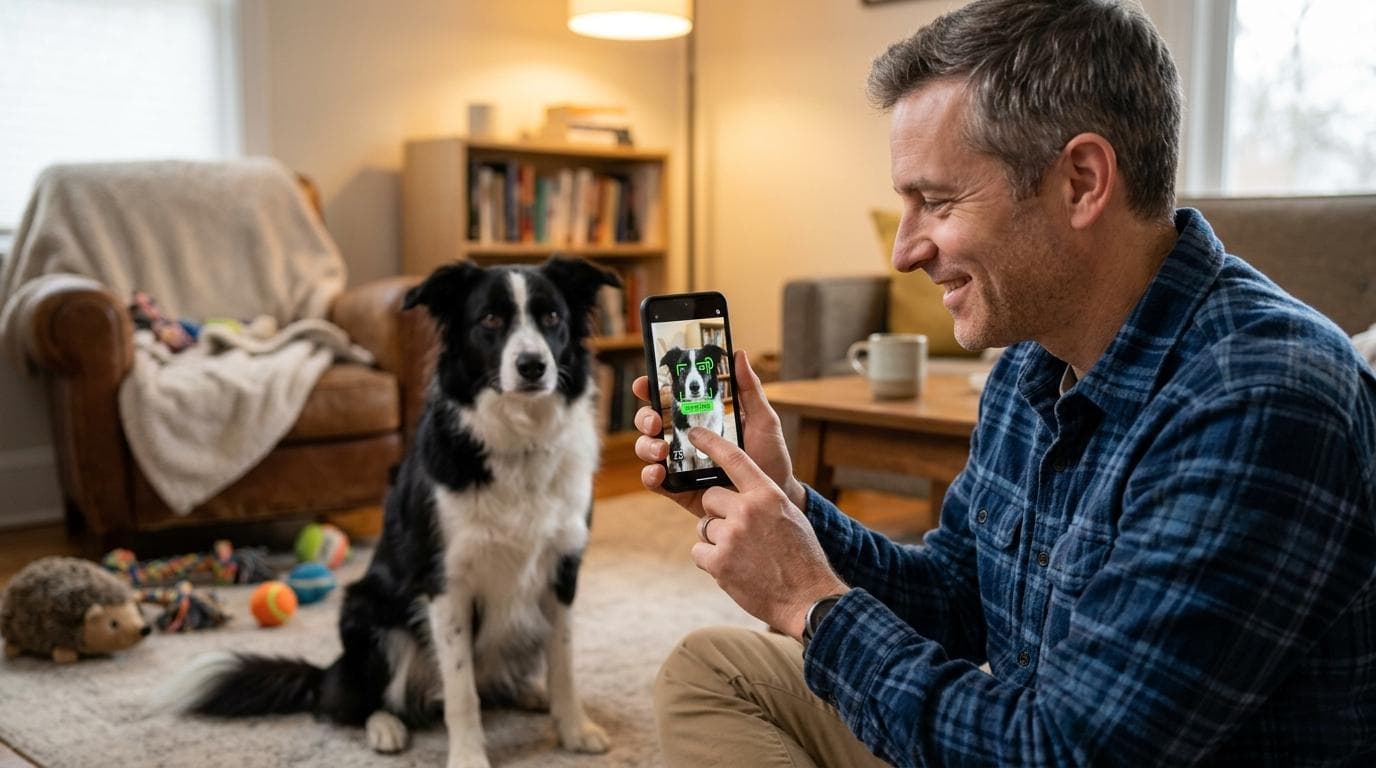
Honestly, as someone who has studied animal behavior for ten years and raised pets for twenty years, I've always wanted to find a simple, practical method for parents—something that doesn't require professional teaching aids or complicated preparation, something that makes parent-child nature education easy to do, whether in a neighborhood or a park. Later, I discovered FaunaScan, an AI tool that is practically a lifesaver for parents. It can accurately identify all kinds of animals—from ants and butterflies by the roadside to pigeons and stray cats in the park. Just take a photo, and you can quickly access information about the animal's breed, habits, habitat, and more. Even as a professional like myself, when I encounter unfamiliar niche insects, I use it as a helpful reference.
I still remember the first time I used FaunaScan to do nature education with Duoduo. It was by a flowerbed in our neighborhood. Duoduo spotted a colorful butterfly, ran around it several times, and excitedly called me over. I took out my phone, opened FaunaScan, and snapped a photo of the butterfly. In less than two seconds, it identified the butterfly as a cabbage white butterfly and displayed information about its food, habitat, and even its life cycle. Duoduo pressed close to the phone screen, watching intently. Then she took her little notebook and carefully drew the butterfly, murmuring to herself: "The cabbage white butterfly likes to eat cabbage leaves, and when it was little, it was a caterpillar." In that moment, it struck me—parent-child nature education really doesn't have to be so hard.
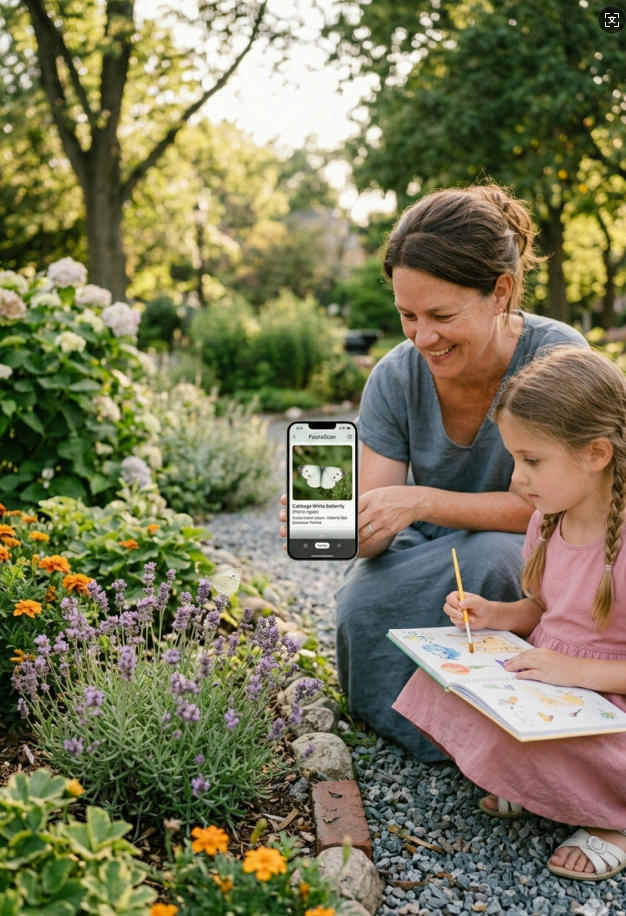
The truth is, using FaunaScan for parent-child nature education requires no complicated preparation. Just keep these things in mind, and your child can gain knowledge and joy through interaction while deepening your parent-child bond. The most important thing is not to force "teaching," but to follow your child's interests. Whatever animal your child is curious about, use FaunaScan to identify it. Don't force your child to memorize facts—after all, the heart of nature education is cultivating curiosity and observation skills, not cramming knowledge.
Oh, and I've prepared a super simple interactive game that parents can try—"Animal Discovery." Make an agreement with your child that in the neighborhood or park, whoever can find three different animals first, identify them with FaunaScan, and record them wins. At the end, share your discoveries together. When Duoduo and I played, she ran all over the neighborhood to find more animals. She not only found butterflies and ants, but also discovered a little sparrow and even a small snail. Afterwards, she proudly explained what she'd learned about each animal using her notebook. The sense of accomplishment she felt was something no toy could ever provide.
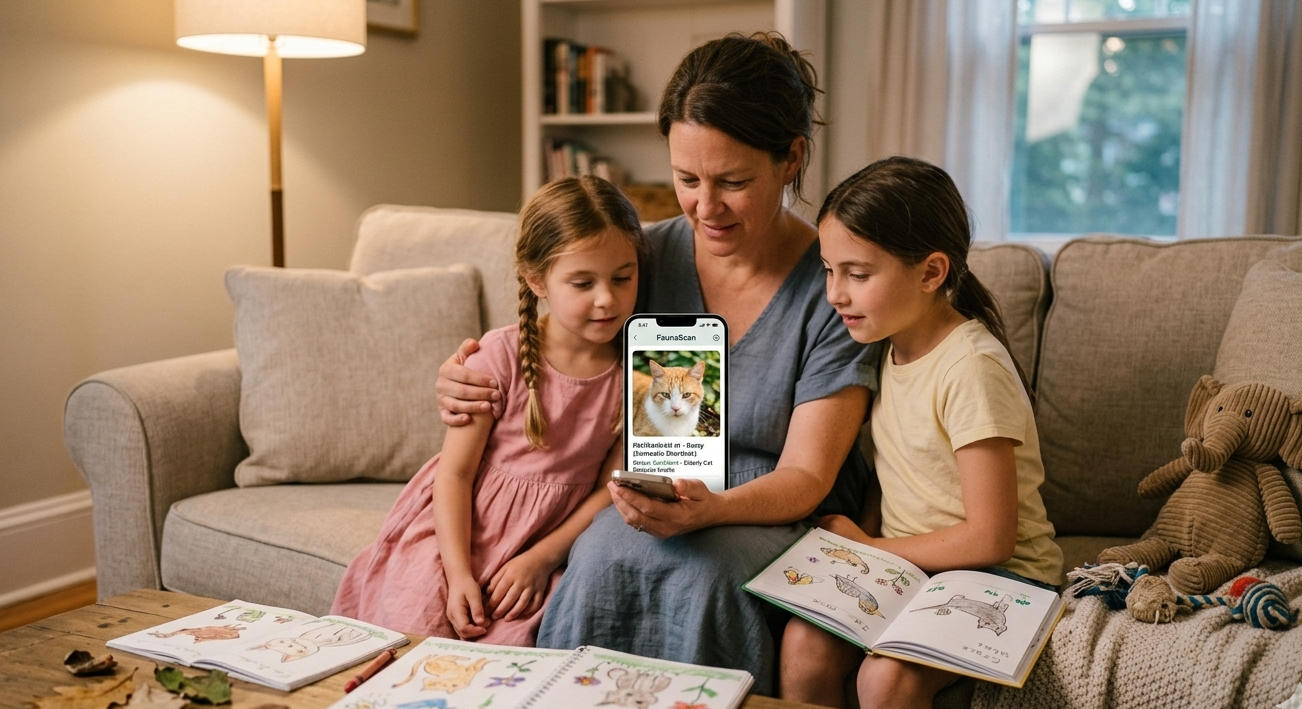
Another important point is to extend the educational content and integrate nature education into daily life. You don't have to go out to do nature education. In the evening at home, you can open FaunaScan with your child and browse different animal species, exploring animals that live in rainforests and deserts, learning about their habitats. Guide your child to think about how we can protect these animals and create better living spaces for them. For us, Grace—our cat—serves as our "family teaching aid." Sometimes in the evenings, I'll use FaunaScan to identify Grace with the neighbor's children, teaching them about cat behavior and how to treat animals gently while respecting every living creature.
I once encountered a parent who left me a message saying that before, whenever they went out with their child, the child would always be glued to their phone, completely ignoring the natural scenery around them. Later, she followed the method I shared and started using FaunaScan to do nature education with her child. Gradually, she noticed that not only was her child willing to put down the phone, but she also became more patient, more interested in observing things around her, and even started explaining animal facts to other children. She also said that their parent-child interactions increased—weekend trips to the park to explore animals became something they both looked forward to the most.
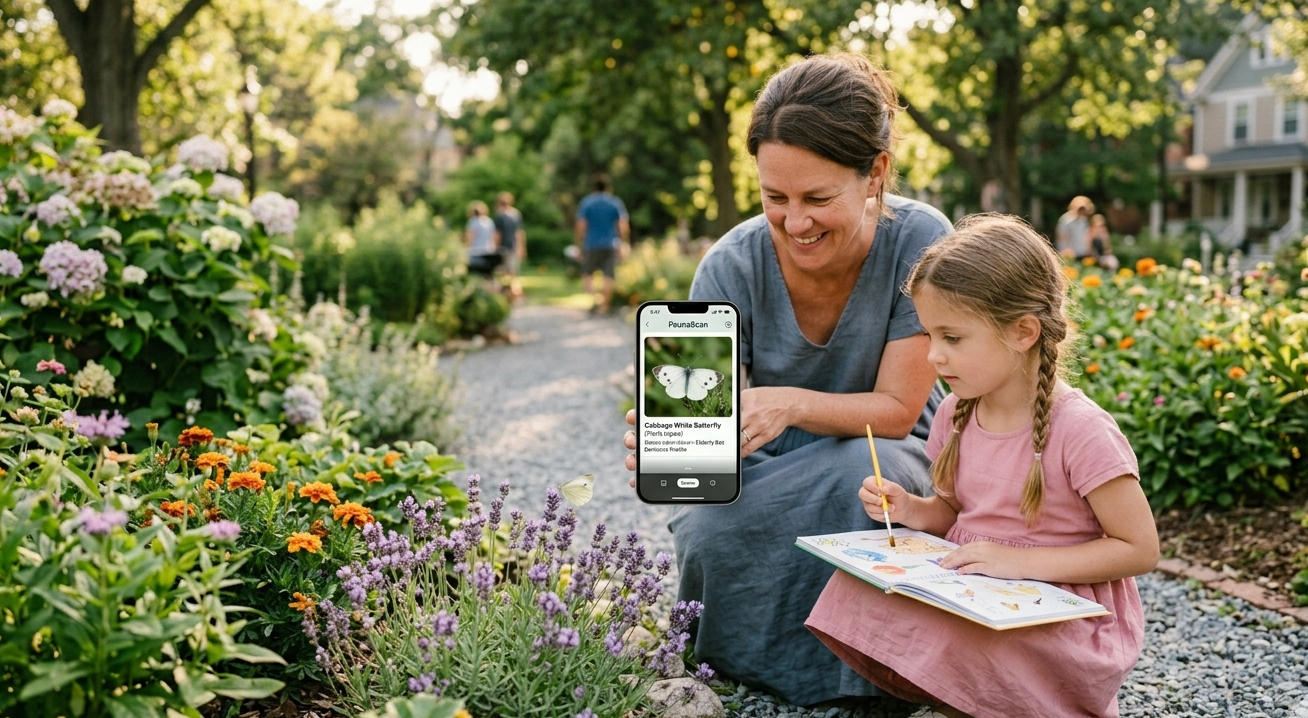
Honestly, parents don't need to put too much pressure on themselves. You don't need to pursue "perfect" nature education, and you don't need to force your child to memorize lots of animal facts. Even if you only identify one animal with your child today, even if you only get your child to observe a small insect for a moment longer—that's still a victory. I always say—and many of you have probably heard me say this—even if today the animal just looks at you a moment longer without running away, that's still a victory. The same goes for parent-child nature education. Even a small gain today is a big step forward in your child's growth journey.
For example, when you take your child to the park and they find ants moving house fascinating, you can take out FaunaScan, snap a photo of the ants, and explore together—what kind of ants are they, why are they moving, what do they usually eat? Your child might ask all kinds of curious questions, like "Do ants sleep?" or "Do ants have mothers?" You don't need to rush to provide answers. You can search for answers together in FaunaScan's database. This way, not only does your child learn, but they also develop research and exploration skills.
Many parents say they don't know much about animals and are afraid of teaching their children wrong information. But I want to say—it's okay. We have FaunaScan as a wonderful helper. It's like a professional animal teacher, helping us answer our children's questions and making it easy for us to become companions and guides on their nature exploration journey. And in this process, we get to learn and grow alongside our children, rediscovering the beauty of nature together.
Do you usually do nature education activities with your children? What challenges have you encountered along the way? Do you have any tips for using tools to make parent-child nature education more engaging?