Last month, a friend from the FaunaScan community sent me a message, and I sat by the window of my study, reading it with a soft heart. She’s been fighting breast cancer for half a year, and every time after chemotherapy, she’s so tired that she can’t even lift her arms. She said, "I often sit by the window in a daze, staring at the squirrels in the yard burying nuts. I wonder how they can remember where they put hundreds of nuts? It seems so small, but it’s so persistent. Looking at them, I feel that maybe I can hold on a little longer." Her words hit my heart — I’ve been studying animal behavior for 10 years, and I’ve never thought that these little squirrels, which we often ignore, can become a source of strength for people in difficult times. Today, I want to share with you what I’ve observed and studied over the years — how squirrels find their buried nuts, and those little wisdoms hidden in their movements, hoping that they can also bring a little peace and courage to you who are going through the hard days of treatment.
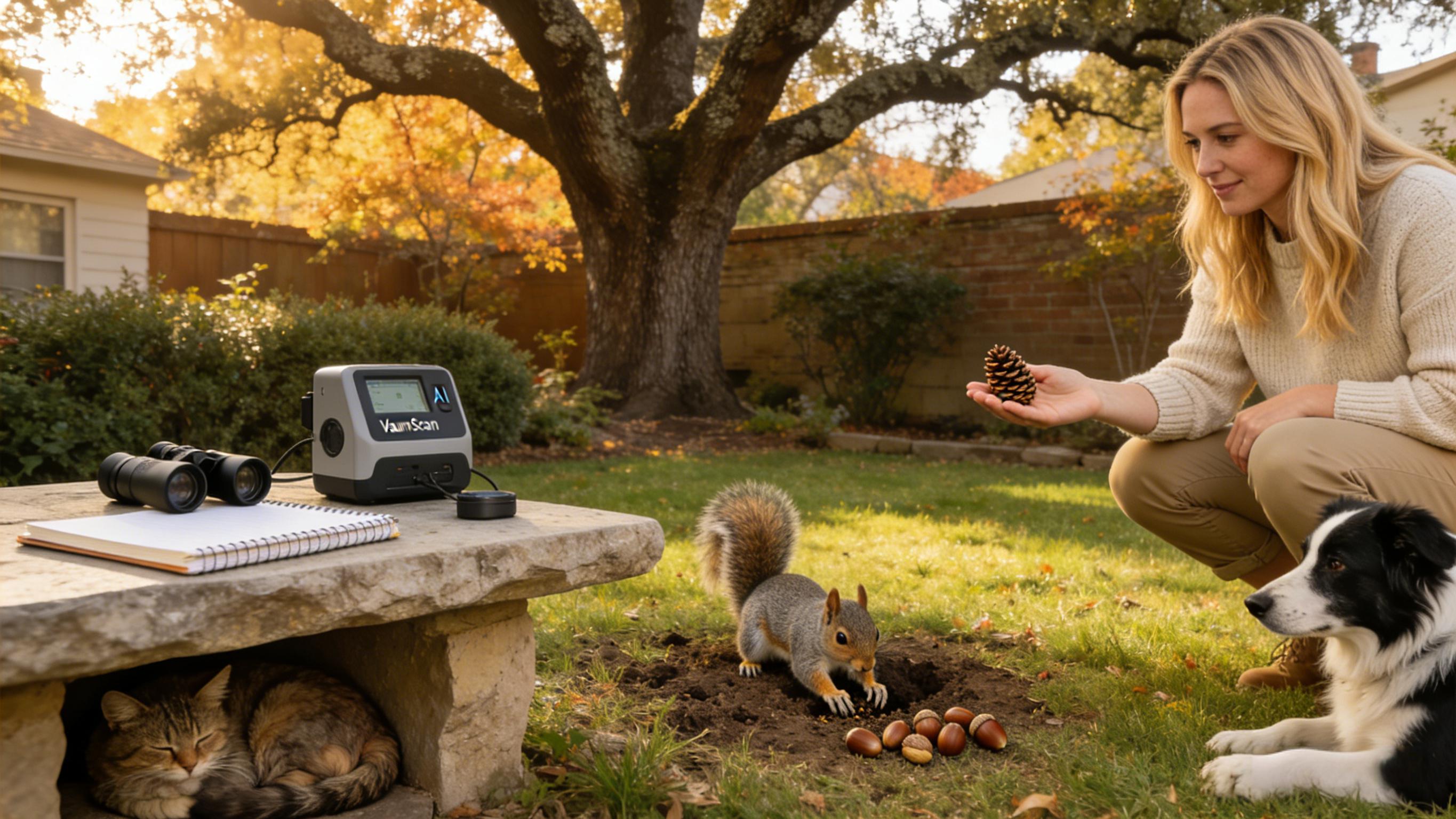
I live in a suburban house surrounded by mountains and rivers, and there are many oak trees and pine trees in the yard. Every autumn, the yard is full of squirrels scurrying around, burying acorns and pine cones everywhere. At first, I just thought it was a common behavior of squirrels, until 3 years ago, when I was doing a research on small mammal spatial memory, I really paid attention to these little guys. I spent 3 months, getting up at 6 every morning, sitting in the yard with a notebook and binoculars, recording every move of the squirrels when they buried nuts. Oh, and Ollie, my border collie, would always lie beside me, watching the squirrels quietly, never barking to disturb them — that’s his little habit, he seems to know that I’m doing something important.
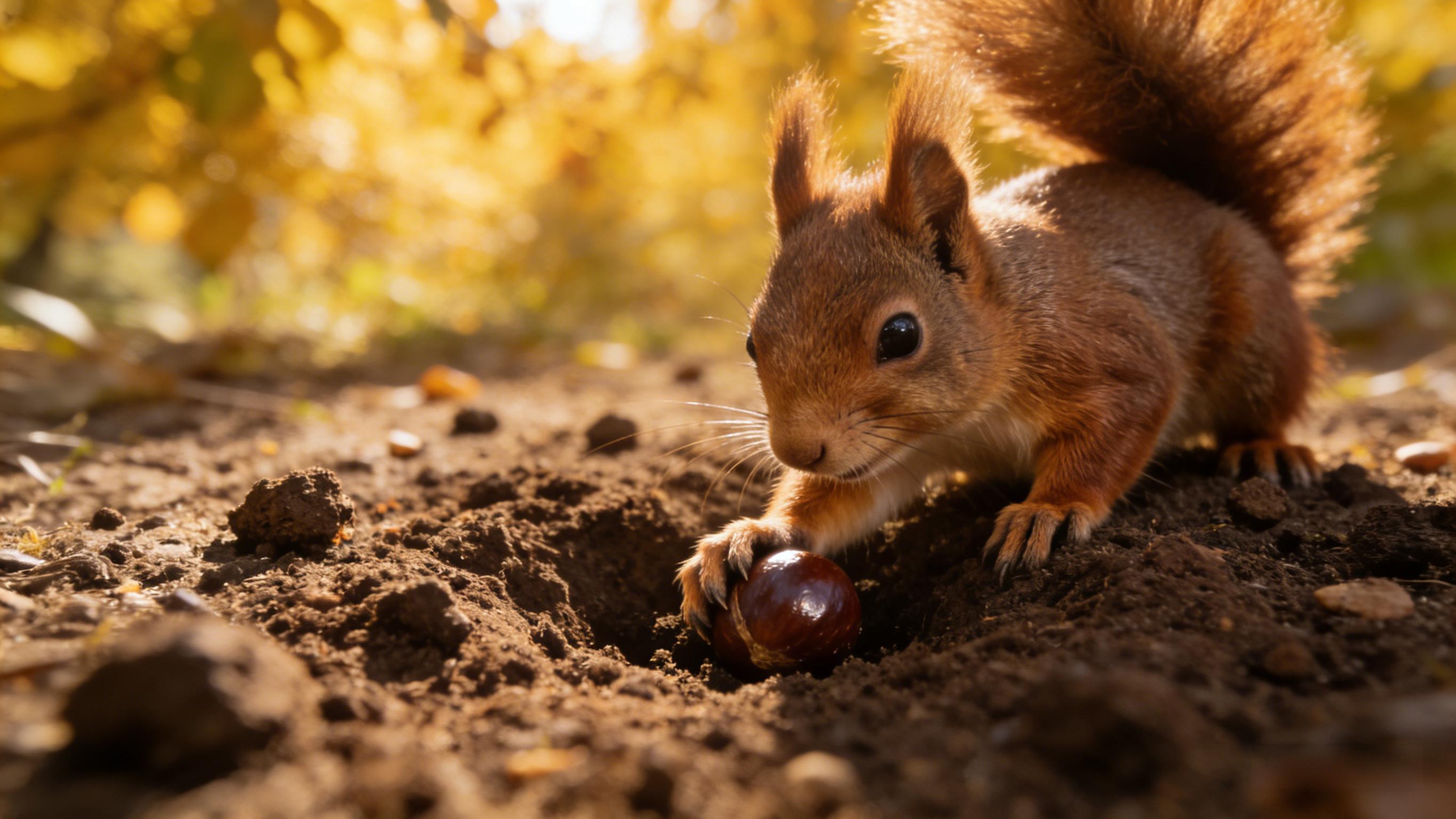
Let me tell you, the spatial memory of squirrels is really amazing — it’s not an exaggeration to say that they have a "built-in GPS" in their heads. When they bury a nut, they don’t just dig a pit and throw it in randomly. They will circle around the pit twice, look at the oak tree next to it, and even touch the stone beside it with their front paws, as if they are memorizing the landmarks. I once marked a few acorns with non-toxic paint and watched a little squirrel bury them. Two months later, when the ground was covered with a thin layer of snow, it actually found those marked acorns accurately! I was shocked at that time — how can such a small animal have such a strong memory?
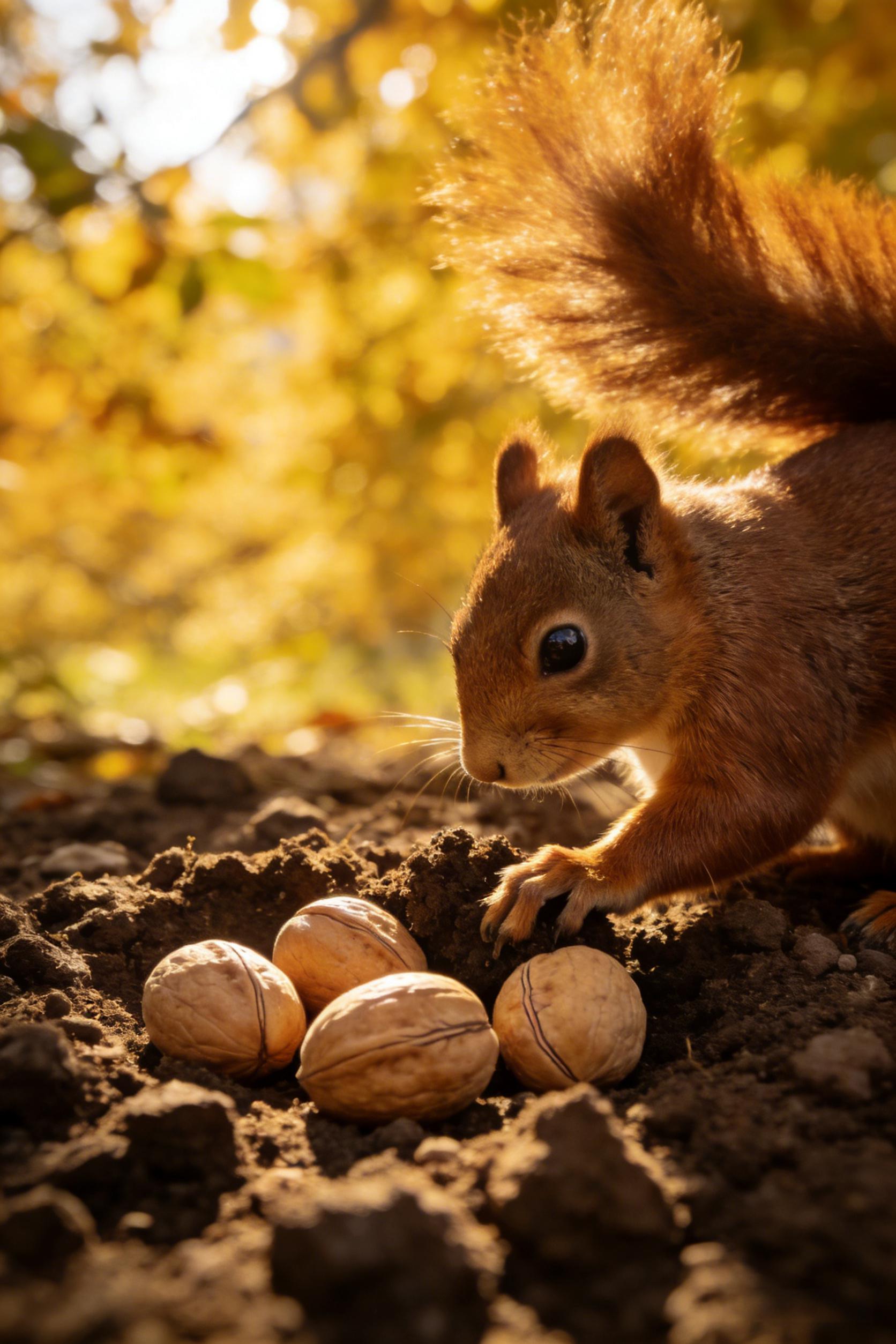
Later, when I checked the latest issue of the Journal of Veterinary Behavior, I realized that squirrels’ brains have a special area responsible for spatial memory, which is even more developed than some large animals. And their sense of smell also helps a lot — even if the nut is buried 10 centimeters deep, they can smell it through the soil. Oh, and there’s a little detail I almost forgot — squirrels will also "classify" the nuts they bury. They will bury the oak nuts that are easy to rot in a sunny place, and the pine cones that are not easy to rot in a cool and humid place. It’s like they have a little "food storage plan", so smart!
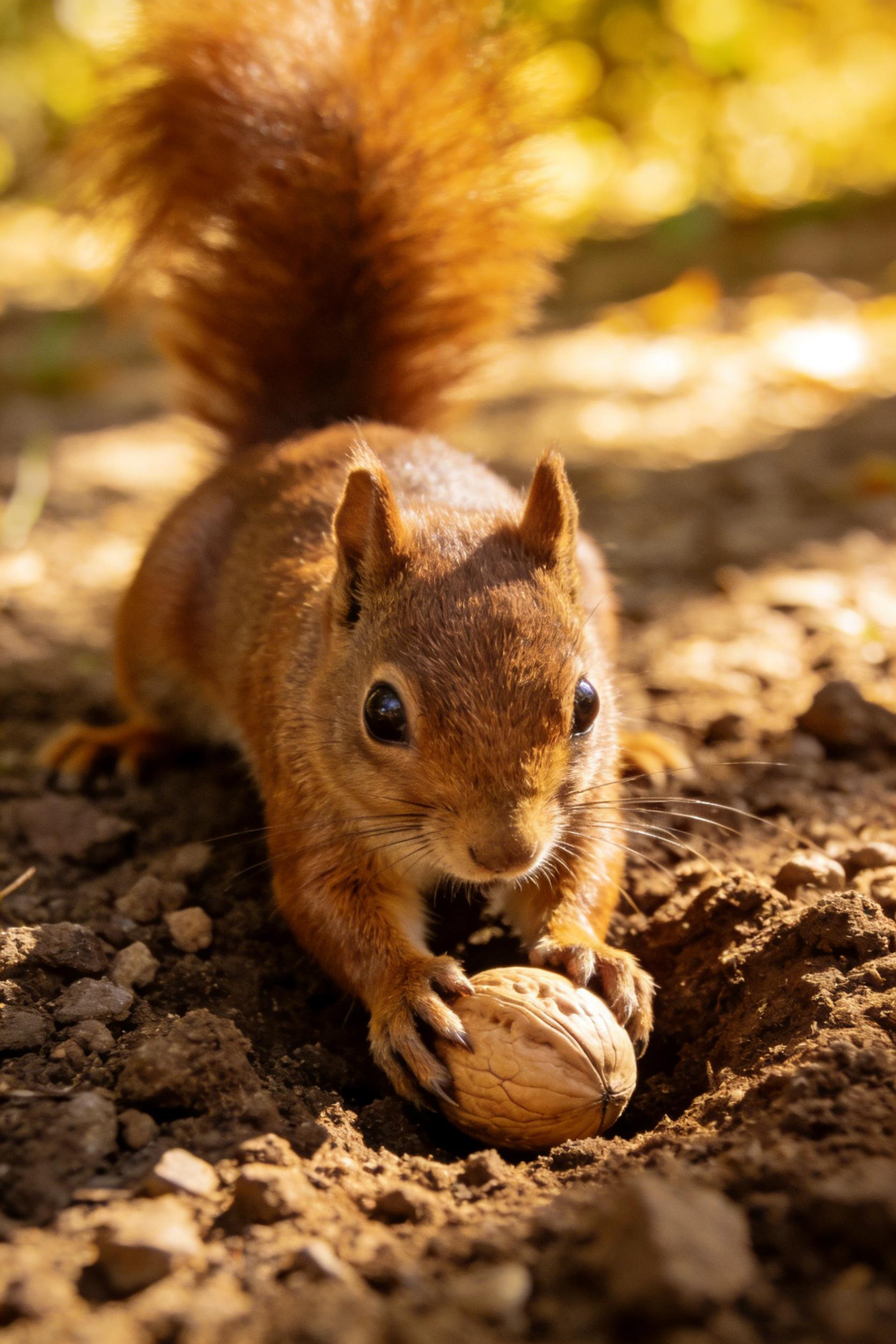
Besides spatial memory, their deceptive burying behavior is also very interesting. Once, I saw a squirrel being followed by another squirrel when it was burying nuts. It pretended to dig a pit, put the nut in, covered it with soil, and even patted the soil with its front paws to make it look flat. But when the other squirrel left, it immediately dug up the pit and took the nut to another place to bury it. Hahaha, it’s like a little trickster, right? But this is not mischief, it’s a survival skill they have evolved — in the wild, food is precious, and if they don’t hide their food well, they may starve to death in winter.
I know, for you who are undergoing cancer treatment, every day is hard. You may be troubled by nausea and fatigue after chemotherapy, or you may feel hopeless about the future. But when you feel tired, you can try to sit by the window and watch the little squirrels outside — watch them scurry around to collect nuts, watch them carefully bury every food, watch them find the nuts they buried in winter with persistence. They are so small, but they never give up in the face of survival difficulties. Isn’t this the strength we need?
I once had a patient friend who was so depressed after chemotherapy that she didn’t want to talk to anyone. I told her to watch the squirrels in her yard. She followed my advice, and every afternoon, she would sit by the window and watch the squirrels. A month later, she sent me a photo — a little squirrel was standing on her windowsill, holding an acorn in its mouth, as if looking at her. She said, "Every time I watch it, I feel that life is so precious. If a small squirrel can work so hard to survive, why can’t I?" That’s the magic of nature — it always uses the simplest little things to give us the most powerful strength.
I often say, "Love them, start with understanding their silence." These little squirrels can’t speak, but their every move is telling us the truth of survival — persistence, wisdom, and never giving up. They bury nuts not only for survival, but also for the hope of the next spring. Just like you, who are fighting cancer, every day of persistence is for the hope of recovery.
By the way, have you ever watched squirrels bury nuts? Do you have any interesting discoveries? Leave a comment below and let’s chat — I read every comment personally, just like I do every day. Because I know, every word you type is not only a share, but also a kind of courage. Remember, you are not alone in this journey. You have your family, your friends, and these little creatures in nature. Even if today is just a little better than yesterday, that’s a victory. And those little squirrels outside the window are also cheering for you, waiting for you to recover and watch them welcome the next autumn together.